

Water tanks are vital for a clean, consistent water supply. Without proper maintenance, however, they can become contaminated, posing serious health risks and degrading water quality. This reality presents a common dilemma for homeowners and facility managers: should you clean the tank yourself or hire a professional service? The thought of a DIY cleaning—draining, scrubbing, and refilling—can be tempting. But when the water your family uses is at stake, the decision is more critical than a typical weekend project. The choice between DIY and professional water tank cleaning is about more than saving a few shillings; it affects your health, water quality, and the tank’s lifespan.
This guide explores both DIY and professional cleaning methods, compares their pros and cons, and helps you make the best choice for your situation.
Why Clean Your Water Tank?
Regular cleaning isn’t just about good housekeeping; it’s a critical investment in your health and property.
- Health and Hygiene: A neglected tank is a perfect breeding ground for dangerous microorganisms like E. coli and Legionella. These can cause waterborne diseases, leading to everything from stomach issues to serious respiratory infections, posing a greater risk to children and the elderly.
- Water Quality and Appliance Protection: Accumulated sediment, rust, and debris can ruin your water’s taste, color, and smell. This sludge can also travel into your pipes, clogging plumbing and damaging expensive appliances like water heaters and washing machines.
- Regulatory Compliance: For businesses and commercial properties, regular, certified water tank cleaning is often a legal requirement to ensure the safety of employees and customers
DIY Water Tank Cleaning
For the hands-on homeowner, cleaning your own water tank is a tempting way to save money. It is, however, a laborious task that demands careful planning and the right tools.
A DIY cleaning requires you to perform every step, from draining the tank to scrubbing and disinfecting its interior before refilling. The work demands physical effort, a clear understanding of the process, and a commitment to safety.
Pros of DIY Cleaning
- Cost Savings: The clearest advantage of a DIY approach is cost. You avoid labor fees and pay only for basic tools and supplies, many of which you may already own.
- Scheduling Flexibility: Cleaning the tank yourself allows you to work on your own schedule. You can choose the most convenient time without coordinating with a professional service.
- System Familiarity: Handling your water tank directly gives you a better understanding of your home’s water system. You become more familiar with its parts, making it easier to spot future problems like leaks or damage.
- You can customize lists now to look any way you like
Cons of DIY Cleaning
- Incomplete Cleaning: Without proper training, it is easy to clean incompletely. You might miss hidden algae or fail to remove all sediment. This leads to rapid re-contamination, defeating the purpose of the cleaning.
- Limited equipment: While you can buy basic tools, you’ll lack the professional tools and equipment for thorough cleaning. The high-pressure jets and powerful vacuums used by experts are more effective at removing stubborn contaminants.
- Ineffective Tank Disinfection: Household bleach (if used) is difficult to dilute precisely for effectiveness without leaving harmful residues. It’s almost impossible to verify complete bacterial kill without testing.
- Safety Risks: DIY water tank cleaning has inherent risks.
- Confined Spaces: Danger of suffocation from fumes, lack of oxygen, or being trapped inside (especially for underground or large tanks).
- Slippery Surfaces: High risk of falls and injury inside the tank.
- Chemical Exposure: Improper handling of disinfectants can lead to skin irritation, respiratory issues, or eye damage.
- Structural Damage: Using incorrect tools or cleaning methods can damage the tank lining/material or water system.
- Time & Effort: It’s a very physically demanding, dirty, and time-consuming job.
- Improper Waste Disposal: Contaminated sludge and wastewater need to be disposed of responsibly, which many homeowners might not know how to do or have the means for.
- Hidden Issues Undetected: A homeowner might miss small cracks, leaks, or internal damage that a professional would identify.
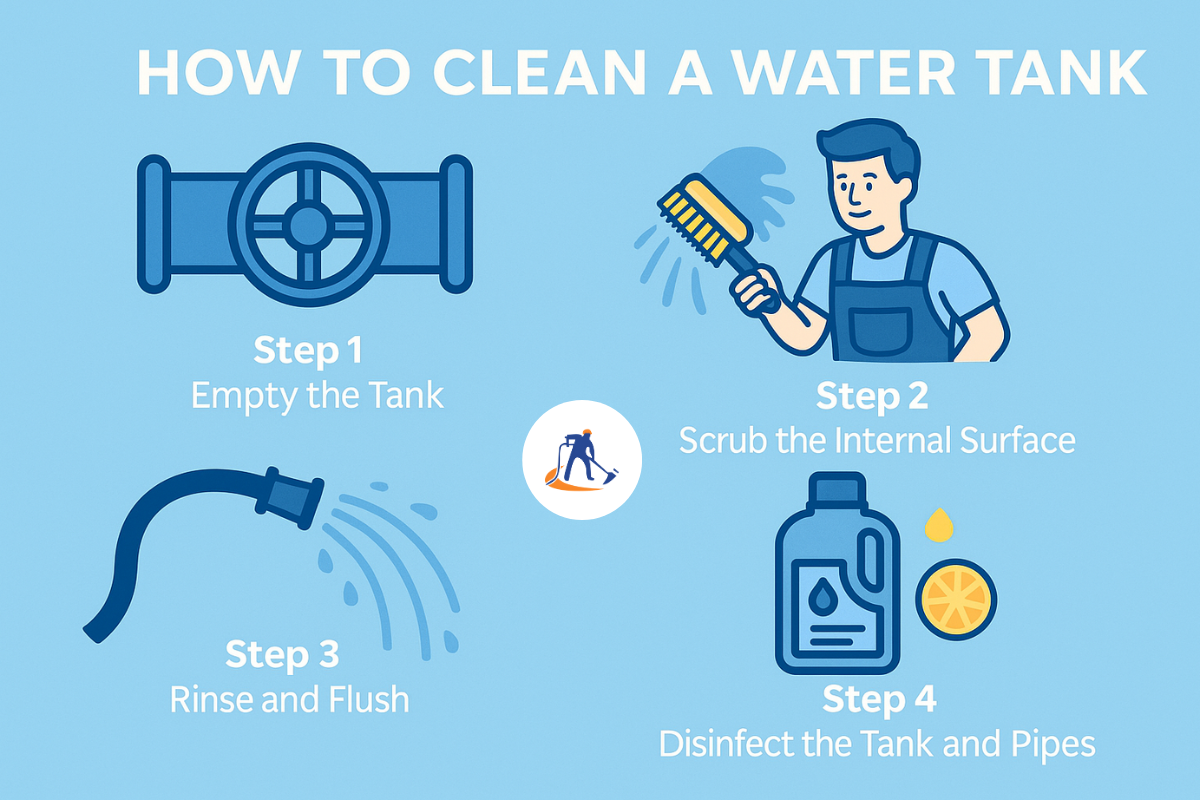
Typical Steps in DIY Tank Cleaning
If you decide to clean your water tank yourself, follow these steps carefully:
- Drain the Tank: Open the outlet valve and use a hose to direct water away from the area.
- Scrub the Interior: Use a scrub brush and a mixture of detergent and hot water to clean the walls and floor.
- Rinse Thoroughly: Remove all detergent residue to avoid contaminating the water.
- Disinfect: Add chlorine bleach (50 ppm ratio) and let it sit for 24 hours before draining and refilling.
For a detailed guide, check out How to Clean a Water Tank Yourself.
Professional Water Tank Cleaning
Hiring professional water tank cleaners ensures your water tank is cleaned thoroughly, safely, and efficiently. These experts use specialized knowledge and equipment to deliver a superior result.
Professionals follow a systematic process, often beginning with an inspection to assess contamination, followed by draining, scrubbing or power washing, disinfecting, rinsing, and post-cleaning assessment. They use mechanized tools for cleaning and adhere to strict safety protocols. After cleaning, they can provide a certificate of completion, which is often essential for commercial properties.
Advantages of Professional Tank Cleaning
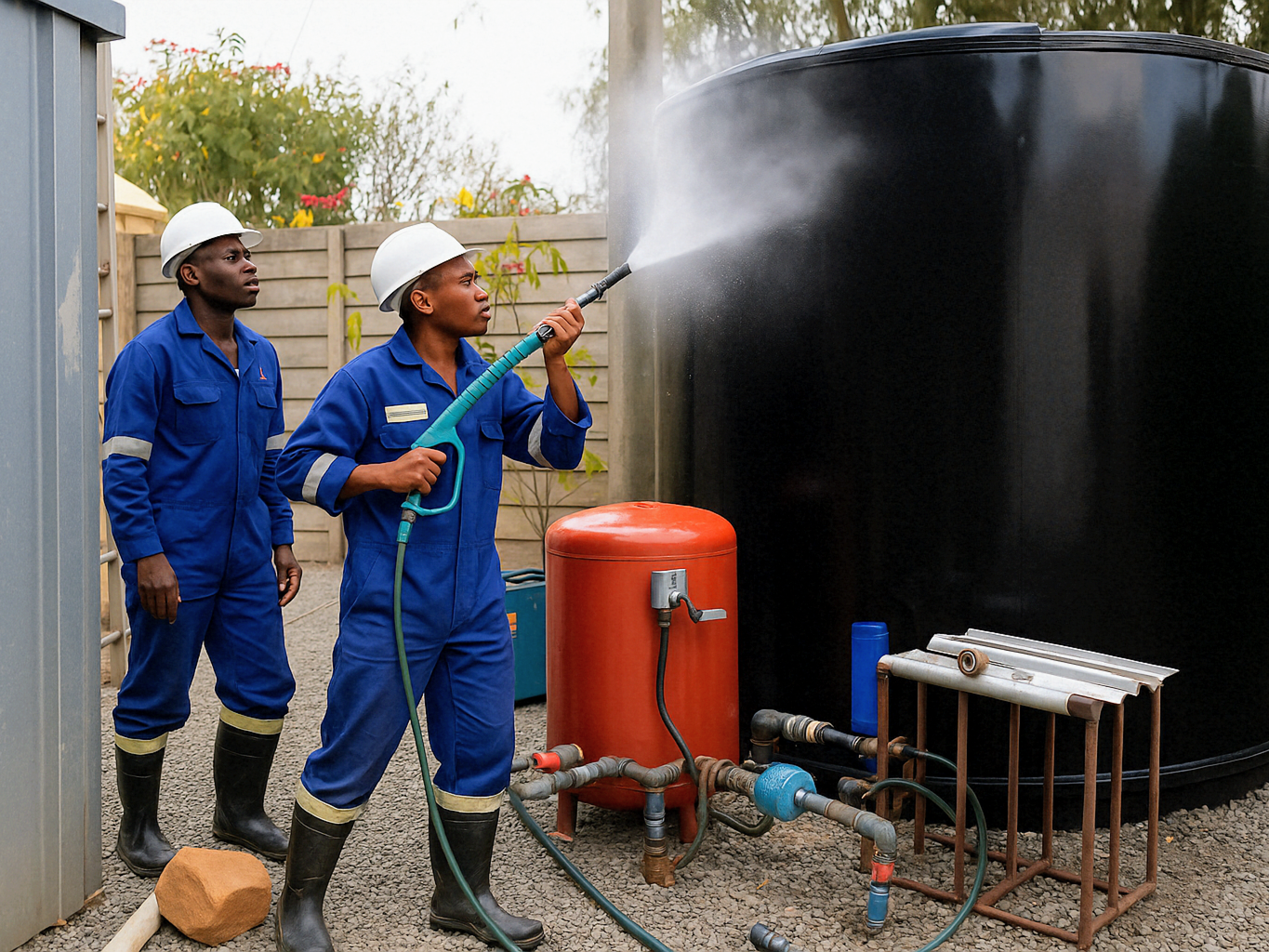
- Expertise & Training: Professionals are trained to eliminate all contaminants. Their equipment provides a deep clean that is difficult to achieve alone. They understand different tank materials and types (plastic, concrete, steel; overhead, underground) and apply the correct cleaning methods for each.
- Specialized Equipment: Access to high-pressure jet washers (far more powerful than a garden hose), industrial sludge pumps/wet-vacs, specialized long-handled brushes, ventilation equipment, and precise chemical applicators.
- Comprehensive Cleaning & Disinfection: Thorough removal of all sediment, algae, biofilm, and other contaminants. Use of food-grade, environmentally safe disinfectants applied at precise concentrations, followed by meticulous rinsing to ensure no harmful residues.
- Long-term cost-effectiveness: Professional cleaning helps extend the lifespan of your tank by preventing corrosive build-up and ensuring structural integrity is maintained. Early detection of minor issues (cracks, leaks) can prevent costly future repairs.
- Compliance: Reputable services ensure your water tank is cleaned according to local hygiene standard. They’re licensed and insured, protecting you from liability for accidental damage. The certificate they provide also serves as proof of compliance with health regulations.
- Uncompromising Safety Protocols: Professional teams follow strict safety guidelines, including using full PPE, adhering to confined space entry procedures, and implementing fall protection. This protects both you and them.
- Time and Effort Savings: Hiring a professional saves you significant time and labor. They manage the entire process from draining to refilling, freeing you to handle other priorities.
Disadvantages of Professional Tank Cleaning
- Higher Cost: The primary drawback is the cost, which is higher than for DIY supplies. This fee, however, is an investment in your health and the longevity of your water system.
- Dependency on External Scheduling: You must schedule an appointment, which requires some flexibility. While most companies are accommodating, it lacks the immediacy of a DIY project.
- Risk of Unlicensed Providers: The market includes unlicensed individuals posing as professionals. Always verify a company’s credentials and customer reviews to avoid shoddy work or scams.
DIY vs. Professional Cleaning: A Quick Comparison
For a clear overview, the following table summarizes key aspects:
| Feature / Aspect | DIY Cleaning | Professional Cleaning |
|---|---|---|
| Cost | Cost-effective, saves on service fees | More expensive; an investment in longevity. |
| Equipment | Requires basic tools (hoses, brushes, bleach); may lack specialized equipment. | Employs professional-grade equipment, extendable ladders, and advanced treatment systems. |
| Safety | Higher risk of exposure to contaminants and chemicals. | Lower risk with adherence to safety protocols. |
| Thoroughness | May miss hidden contaminants and hard-to-reach areas. | Ensures deep and effective cleaning, covering all areas. |
| Time and Effort | Time-consuming and physically demanding. | Efficient, quick, hassle-free for you. |
| Long-Term Benefits | Potential for incomplete cleaning leading to future issues. | Identifies and resolves potential problems, extending the tank’s lifespan. |
| Suitability | Best for small, simple tanks with minimal contamination, assuming proper knowledge. | Ideal for large, complex, or heavily contaminated tanks, ensuring safety and efficiency. |
Cost Comparison: DIY vs. Professional Cleaning
DIY Water Tank Cleaning Costs
A DIY cleaning is often the cheaper option. In Kenya, for example, costs range from KSh 500 to KSh 2,000 depending on the tank size and the supplies you need like brushes, detergents, and a hose. While costs vary depending on where you are, DIY keeps initial expenses low. This is a practical choice for a small tank if you have the time and skill, but it is not without challenges.
Professional Water Tank Cleaning Fees
Hiring a professional costs more. In Kenya, services typically range from KSh 3,000 to KSh 15,000, depending on tank size and location. While pricier, professional cleaning is an investment in your tank’s longevity and your water’s quality.
Hidden Costs to Consider
Be aware of potential hidden costs. Improper DIY cleaning can lead to faster re-contamination or damage to the tank, resulting in expensive repairs. The true hidden cost of a poor DIY job is the health risk from contaminated water.
Professionals, on the other hand, may charge extra for emergency call-outs, inaccessible locations, or specialized disinfectants.
DIY or a Professional: Which Option is Better?
When Is DIY Cleaning Acceptable?
A DIY approach is suitable only for minor maintenance, such as:
- Brushing dust or leaves off the tank’s exterior.
- Wiping the accessible inner surfaces of a new, unused tank before its first fill.
These are not deep-cleaning tasks and cannot replace a comprehensive, periodic cleaning.
When Should You Hire a Professional?
Knowing when to move beyond DIY and call a professional is key to ensuring your water is safe. While routine maintenance is important, here are the definitive signs your water tank needs professional cleaning:
- Any instance of discolored water, a foul taste, or a bad smell is a primary red flag.
- Your water pressure suddenly drops. This could signal a blockage in your system, often related to sediment buildup.
- Recurring stomach issues in your household, which could be linked to waterborne pathogens.
Beyond these urgent signals, you should always hire a professional for:
- Routine Maintenance: Your regular annual or biannual deep cleaning is essential for preventing problems.
- Inaccessible Tanks: For safety and effectiveness, large, underground, or hard-to-reach tanks (e.g., on a high roof) should always be handled by professionals.
- Commercial and Regulated Properties: Facilities like hotels, schools, or hospitals must adhere to strict health regulations and require professional servicing.
Professionals can also provide additional services, such as water testing and tank inspections, to ensure your system is in top condition.
The Verdict
Ultimately, the choice between DIY and professional water tank cleaning depends on your specific needs and circumstances. Consider factors like your tank’s size and accessibility, your experience and comfort level, the potential for health risks, and your budget.
- Choose DIY cleaning for small, easily accessible tanks if your budget is tight and you are performing only light, frequent maintenance. But, be sure to research proper cleaning methods and safety precautions.
- Choose a Professional Services for large tanks, heavy contamination, or if health and safety are your primary concerns. Their expertise ensures a thorough, safe, and effective cleaning.
For example, a small household tank might be manageable with DIY water tank cleaning methods, while a community tank benefits from professional water tank cleaning services.
According to the World Health Organization (WHO), neglecting water tank maintenance can indeed lead to contamination risks, including the growth of Legionella bacteria. Whether you choose DIY or professional cleaning, keeping your tank in top shape is non-negotiable.
Don’t Compromise on Your Water Safety – Make the Right Choice
While the DIY spirit is admirable, the potential savings on water tank cleaning are dwarfed by the significant risks to your health, safety, and property. An incomplete clean can give you a false sense of security while leaving your family exposed to harmful contaminants.
Investing in professional water tank cleaning is an investment in your well-being and the longevity of your water system. It provides certainty, safety, and the undeniable peace of mind that comes from knowing your water is pristine.
For a truly safe, sparkling clean, and professionally disinfected water tank, don’t take chances. Contact KiTank Cleaning today! We are the trusted experts for comprehensive water tank cleaning services across Nairobi and major Kenyan towns, ensuring your water is always pristine.
