
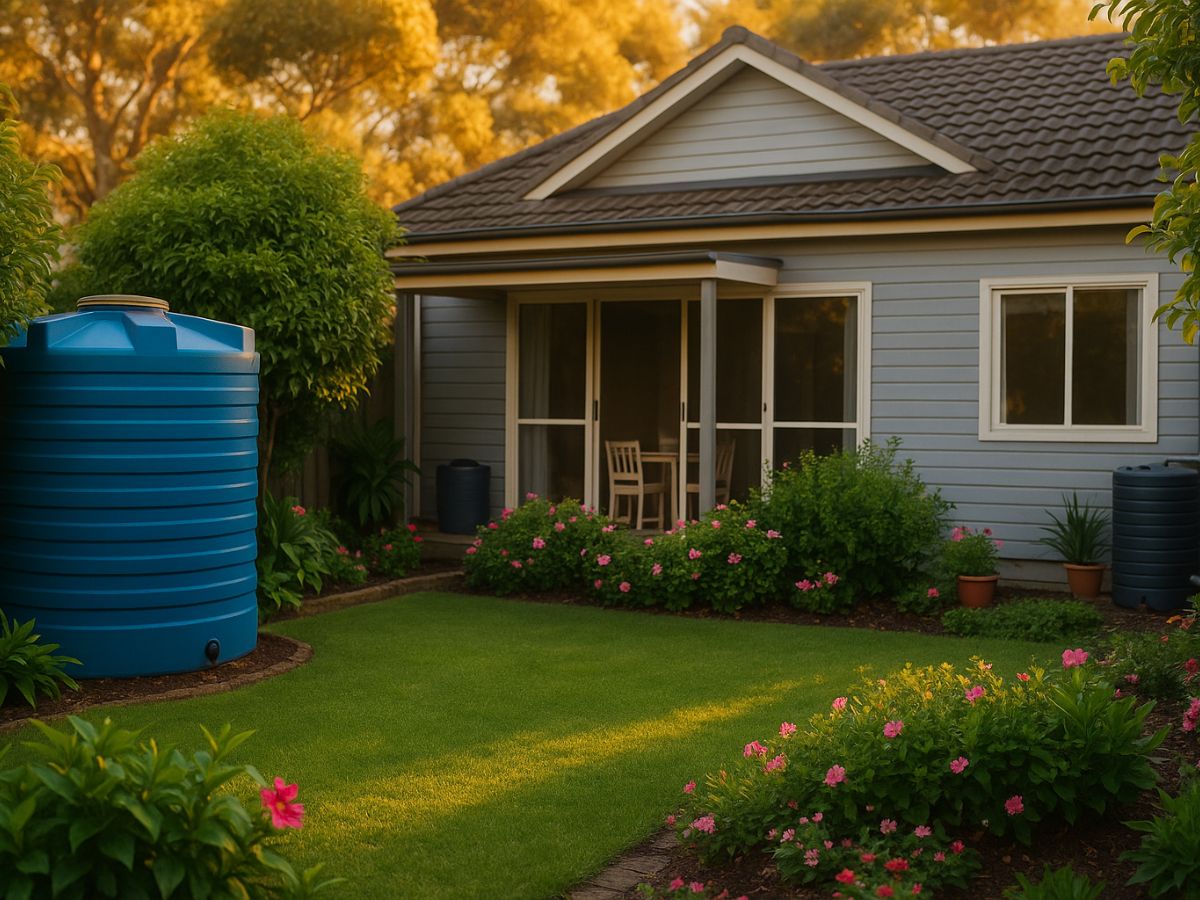
Choosing the right size water tank is a crucial decision for any homeowner, farmer, or business owner. The right size ensures a reliable water supply, reduces dependency on external sources, and contributes to long-term cost savings. Whether you rely on municipal water, a borehole, or rainwater harvesting, a well-sized tank can improve water efficiency and support sustainability efforts.
Choosing a tank that’s too small leads to the constant frustration of running out of water at critical moments. On the other hand, an oversized tank is a waste of money, space, and can even compromise water quality if water sits stagnant for too long.
This comprehensive guide will walk you through everything you need to know to select the right water tank size for your needs, ensuring efficiency, cost-effectiveness, and a reliable water supply for years to come.

Key Factors Influencing Your Water Tank Size Decision
Several key factors come into play when selecting a water tank size. A thorough evaluation of these elements will lead you to a much more accurate and suitable choice.
Number of Users/Occupants
The number of people using the water is the first factor to consider. A single-person household has different needs than a family of six or a commercial enterprise. For businesses, this includes employees and customers. A small office, for example, will use less water than a hotel or school, where consumption for sanitation and operations is much higher. This count forms the baseline for your calculation.
Average Daily Water Consumption
A person’s daily water use varies. For basic needs like drinking, cooking, and hygiene, a conservative estimate is:
- Rural Areas: Approximately 40 liters per person per day.
- Urban Areas: Approximately 120 liters per person per day.
- WHO Recommendation (Basic Needs): Around 4 gallons (approx. 15 liters) per person per day for basic hygiene and food.
- General Household Use: Can range from 50 to 100 liters per person per day, depending on habits and appliances (showers, toilets, laundry, dishwashing, outdoor use).
These figures highlight that water usage varies significantly, so a personalized assessment is always best.
Reliability of Your Water Source
The availability of your water source determines the reserve capacity you need. The less reliable the source, the larger the tank required to cover supply gaps.
- Municipal Supply: Rationing schedules and unplanned outages are common. A tank that holds a 3- to 5-day supply is a wise reserve.
- Borehole or Well: Boreholes depend on electricity, so power outages can interrupt your supply. A slow recharge rate can also be a factor. Your tank should be large enough to store water to cover these potential downtimes.
Rainwater Harvesting
This is a common and effective method for water supply in many parts. If relying on rainwater, the roof catchment area and local rainfall patterns significantly impact the required tank size. Your tank must be large enough to collect sufficient water during the rainy season to last through the dry season.
Intended Use of Water
What is the water for? A small 500-litre tank may suffice for basic potable water—drinking and cooking. If the tank must supply an entire home or business, however, you must account for all uses, including showers, toilets, and laundry. A tank for full domestic use must be much larger than one for a simple backup. Likewise, commercial use often requires very large capacities for kitchens, restrooms, or industrial processes.
Available Space for Installation
You must consider your property’s layout. A 10,000-litre tank may be ideal, but do you have the space for it? Your available space will help determine the tank’s type and orientation. Different types of tanks are available:
- Vertical tanks offer the most capacity for their footprint but require height.
- Slimline tanks are tall and thin, designed for narrow spaces.
- Horizontal tanks fit in areas with height restrictions but need more ground space.
- Underground tanks save surface space but have a more complex and costly installation.
Balance your ideal capacity with the practical limits of your property. You must also consider access for maintenance, connections for plumbing, and any local building codes that may restrict placement.
Tank Materials
A tank’s material affects its durability, size, and cost.
- Polyethylene (Plastic): Lightweight, corrosion-resistant, and affordable. Ideal for most residential uses.
- Steel: Durable and long-lasting. Galvanized steel is common for large agricultural tanks, while stainless steel is hygienic and rust-proof.
- Concrete: Extremely durable for large-scale, permanent installations.
- Fiberglass: Strong and corrosion-resistant, often used for underground tanks.
Plastic water storage tanks are popular for homes due to their lightweight nature, durability, affordability, and ease of installation. They are often made from food-grade polyethylene, which ensures the stored water remains safe for drinking and other household uses.
Budget and Cost Considerations
Your budget is a final, determining factor. Tank prices typically increase with size and material. While larger tanks cost more, the total price includes more than the unit itself. You must also factor in the costs of delivery, installation, a foundation or stand, and plumbing.
A cheaper, smaller tank that fails to meet your needs is a false economy. View this purchase as a long-term investment in your property and your well-being.
How to Calculate Right Size Water Tank You Need
A properly done water tank capacity calculation ensures efficient water management, prevents wastage, and can help reduce reliance on municipal water supplies. Whether for residential, commercial, or industrial use, understanding how to calculate water tank capacity in liters is essential for maintaining a reliable water supply. A miscalculated tank capacity can lead to water shortages or overflows, which can be costly and wasteful.
Calculating Your Ideal Water Tank Capacity For Residential Homes
One simple formula to determine the right size water tank is to multiply the average daily water usage by the number of days between refills or rain events. For households, consider the number of people and their typical usage (drinking, cooking, cleaning, etc.).
Household Water Tank Capacity Calculation Formula:
(Number of Occupants)×(Average Daily Water Consumption per Person in Litres)×(Number of Days of Reserve Needed)=Required Tank Capacity (Litres)Sample Total Tank Capacity Calculation:
For example, a family of four using 75 liters per person per day for basic needs, and wanting a 3-day reserve would need a tank of at least 900 liters.
4 people×75 litres/person/day×3 days=900 litresRecommendation: It’s always best to round up from your calculation to the nearest available size, like a 1000-litre tank.
A Note on Reserve Days:
- Fairly Reliable Supply: 2-3 days is a safe minimum.
- Intermittent/Unreliable Supply: Aim for 5-7 days or more.
- Rainwater Harvesting: For rainwater harvesting, determine how frequently you get rainfall and how much water you can collect from your roof. Your reserve should be calculated in months, not days, to cover the dry season.
For Commercial Businesses (Simplified Approach)
Calculating the commercial water tank size is more complex and often depends on specific industry standards. However, a simplified approach can provide a baseline:
- Offices: Estimate 50-100 litres per employee per day.
- Hotels/Guesthouses: Plan for 200-300 litres per room, as guest consumption is high.
- Schools: A common figure is 50-75 litres per student and staff member.
- Restaurants: This varies greatly based on kitchen operations and the number of covers, but daily needs can run into thousands of litres.
For any large-scale commercial, agricultural, or industrial application, it’s always recommended to consult with a water solutions professional to ensure your water tank capacity or requirements are accurately met.
Water Tank Sizes and Their Common Use-Cases
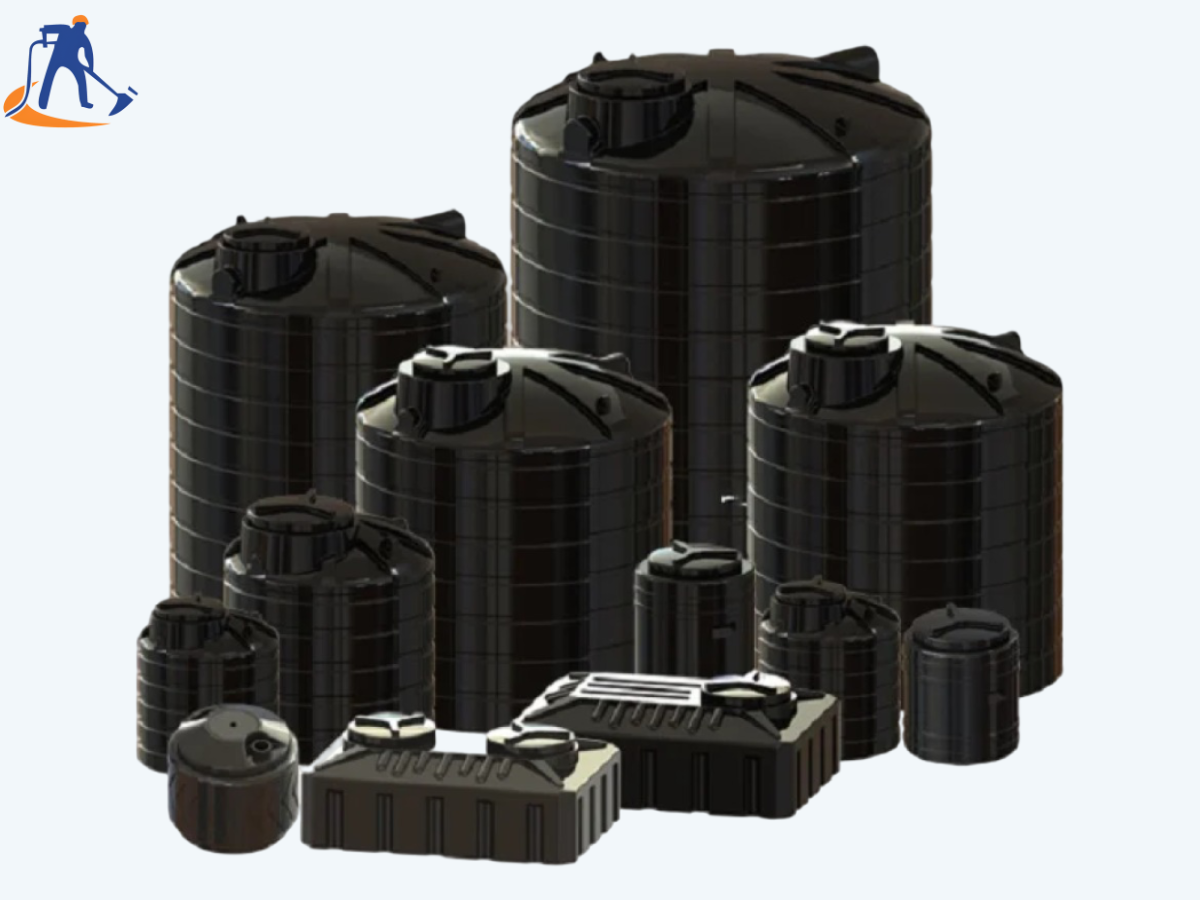
Water tanks come in standard sizes, typically ranging from 50 liters to 75,000 liters. Here’s a look at the common water tank sizes and what they are best suited for.
- Small Tanks (50–500 liters): These tanks are ideal for small households or individual use, particularly in urban areas with limited space. They are often used for gardening, small-scale backup during water shortages, or portable applications.
- Medium Tanks (1,000–2,500 liters): Ideal for average-sized families, small businesses, and agricultural use.
- Large Tanks (3,000–6,000 liters): These cater to institutions, larger farms, or commercial setups. They are suitable for applications like irrigation for small to medium farms or water supply for schools and hospitals.
- Extra Large Tanks (10,000 Litres and Above): Generally designed for commercial buildings (like small hotels and schools), large residential estates with many occupants, agricultural irrigation, and rainwater harvesting systems for properties in rural areas where the municipal supply is non-existent or extremely unreliable, requiring long-term storage solutions.
Water Tank Size Guidelines for Families
Determining the appropriate water tank size for a family involves several factors, with the primary ones being daily water consumption and the desired duration of storage.
Here’s a breakdown of water tank sizes for different family sizes, taking into account general usage and the need for a reliable supply:
- Small Families (1-2 people):
- For supplementary use with a generally reliable main supply: 1,000 – 2,000 liters may be sufficient.
- For a more reliable, primary water source (e.g., rainwater harvesting or in areas with unreliable supply): Consider 5,000 – 10,000 liters or more, depending on storage duration needs.
- Families of 4:
- For supplementary use with a generally reliable main supply: 1,000 – 2,000 liters is a common starting point.
- For ensuring a reliable water supply, especially during dry spells or peak usage, or as a primary source:
- Minimum recommended: 15,000 liters
- Ideal: 22,500 – 30,000 liters
- Families of 5:
- For ensuring a reliable water supply:
- Minimum recommended: 18,750 liters
- Ideal: 22,500 – 46,400 liters (This range allows for significant buffer and long-term supply).
- For ensuring a reliable water supply:
- Larger Families (6-8+ people):
- For ensuring a reliable, consistent water supply:
- Minimum recommended: 30,000 liters
- Ideal: 45,000 – 60,000 liters or even larger, especially if relying heavily on rainwater or in areas with severe water scarcity.
- For ensuring a reliable, consistent water supply:
💡PRO TIP: Always match your tank size not just to your current needs but also with an eye toward future scalability, potential family growth, or increased water demands (e.g., adding a washing machine, expanding a garden).
Mistakes to Avoid When Choosing Water Tank Size
Making the wrong decision about tank size can lead to significant headaches. Avoid these common pitfalls to ensure your tank remains a sustainable and practical asset:
- Underestimating Daily Usage: This is a common mistake that can lead to frequent water shortages. It’s always better to slightly overestimate your needs.
- Ignoring Seasonal Fluctuations: Your water usage may increase significantly during certain times of the year. Factor these peaks into your calculations.
- Choosing Based on Price Alone: The cheapest option isn’t always the best. A low-quality tank or an incorrect water tank size can end up costing you more in the long run.
- Overlooking Expansion Plans: A tank that suits you today might not suffice in a year or two.
For a precise calculation tailored to your specific household and location, always consult with local water tank suppliers or water management experts. They can assess your unique needs, including historical water usage, local climate, and available space, to recommend the most suitable tank size and material.
Beyond the Purchase: Ensuring Your Water Stays Safe

You’ve chosen the perfect size—but the journey to safe water isn’t over. The quality of the tank and its ongoing maintenance are equally, if not more, crucial. A perfectly sized tank is useless if the water it delivers is dirty, contaminated from accumulated sludge, algae, and bacteria.
This is why regular, professional water tank cleaning is not a luxury, but a necessity for your family’s health. Professional cleaners use the right equipment and solutions to thoroughly sanitize your tank without damaging it, ensuring your investment continues to provide truly clean water.
Find the Right Water Tank Size for Your Home
Choosing the right water tank size is a foundational step toward water security. To select the perfect water tank size, assess your daily water needs, consider local water availability, evaluate available space, and plan for potential future needs. Determine the number of people relying on the tank, their water consumption habits, and the frequency of water delivery. By following these steps, you can move beyond guesswork and invest confidently in a solution that perfectly fits your needs.
Remember, a high-quality, perfectly-sized tank is only effective if it’s clean. Regular maintenance is the key to protecting your investment and the health of everyone who relies on it.
Need expert advice on selecting the perfect water tank size for your unique needs, or looking for professional cleaning services for your existing tank in Kenya? Contact KiTank Cleaning Services today! We ensure your water supply is always clean, safe, and perfectly suited to your requirements across Nairobi and major Kenyan towns.
