

As a business owner or facility manager in Kenya, you oversee everything from customer satisfaction to operational efficiency. But what about your water storage tank? Often out of sight and out of mind, your commercial water tank can quietly become a silent liability. Over time, tanks collect bacteria, algae, and sediment, which contaminate your water supply and create significant risks.
A dirty tank creates severe risks: it endangers staff with water-borne diseases, damages your reputation, and violates safety regulations, leading to fines or legal action. Regular commercial water tank cleaning and maintenance protect your staff, preserve customer trust, and ensure you comply with Kenyan Health and Safety laws.
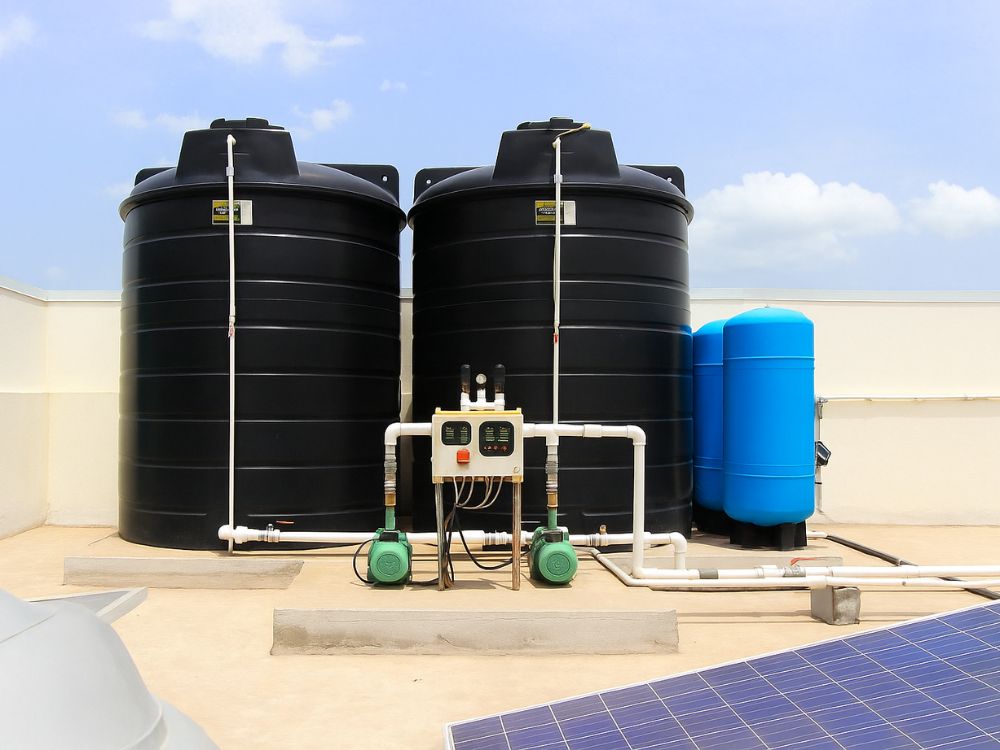
This guide provides a clear checklist to help you identify the seven critical signs that your commercial water tank is overdue for a professional cleaning. Learn what to look for, understand the risks, and know when to call in the experts before a small problem becomes a crisis.
The Obvious Red Flags: Sensory & Visual Warnings
The most immediate warnings often come directly from the water itself. Listen to feedback from your staff and customers—their senses are your first line of defense.
Sign 1: Discolored, Cloudy, or Foul-Smelling Water
This is the most obvious red flag and one that directly impacts user experience. Clean, safe water should always be clear, odorless, and tasteless. If you notice anything less, it’s a direct sign of water tank contamination.
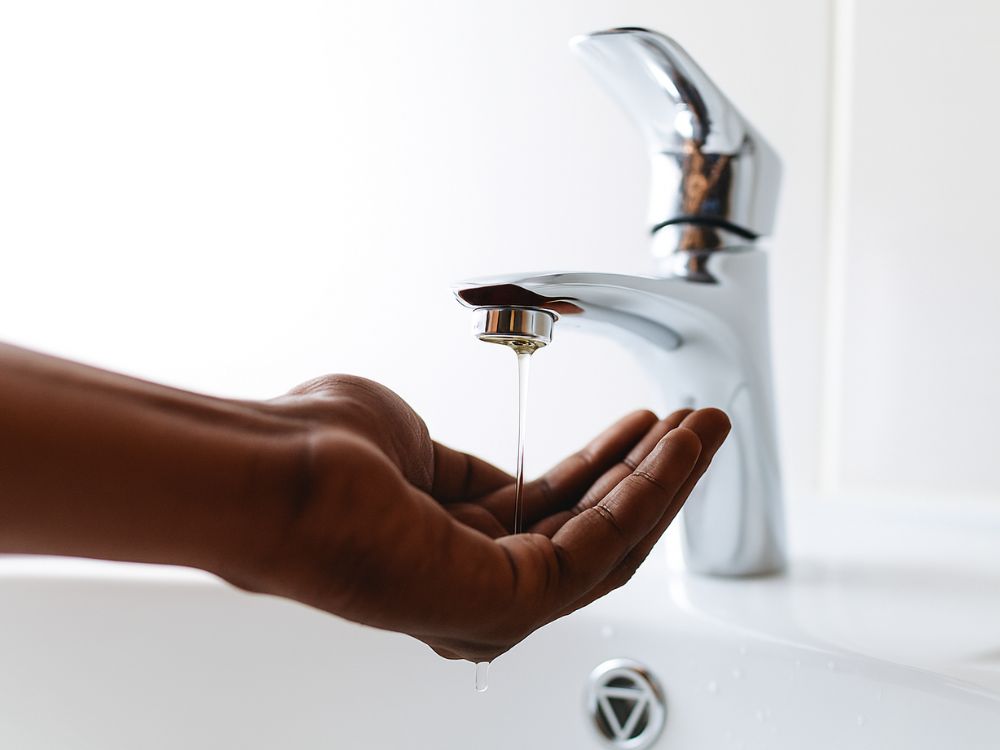
- The Sign: You notice murky, brown, or yellow water (high turbidity) coming from taps. Staff or clients complain about a musty/earthy taste, a metallic tang, or a distinct “rotten egg” smell.
- The Cause:
- Discoloration: Caused by rust particles from a corroding tank/pipes, sediment like sand and silt getting stirred up, or mineral deposits like iron.
- Earthy/Musty Odor: A classic sign of algae or bacterial growth.
- Metallic Taste: Leaching of metals like iron, copper, or zinc from corrosion.
- “Rotten Egg” Smell: A serious warning caused by hydrogen sulfide gas from bacteria thriving in the low-oxygen sludge at the bottom of a dirty tank.
- The Business Risk: This is a direct assault on your brand. For hotels, cafes, and restaurants, it guarantees customer complaints and negative reviews. For any business, it gives a terrible first impression and can lead to failed water quality tests. In Kenya, failing to meet water quality standards (like those from KEBS) is a serious regulatory issue that can result in fines or suspension.
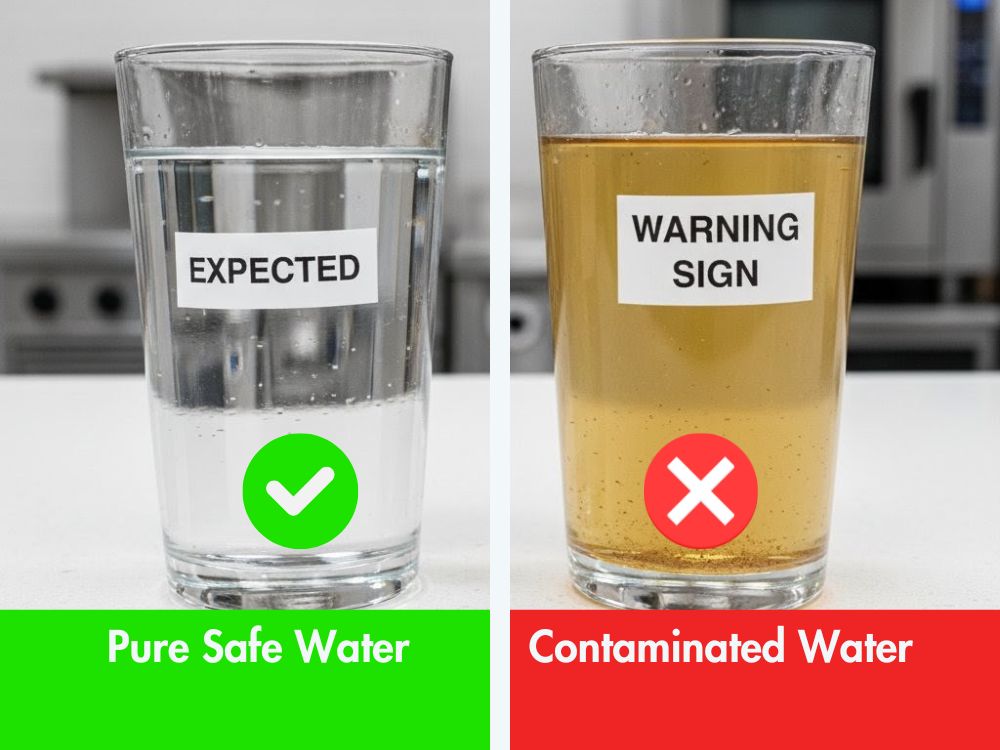
As we’ve seen in our work, it’s a problem that can quickly escalate, which is why we’ve documented how we restored crystal-clear water for a major Nairobi business to show the dramatic difference professional cleaning makes.
Sign 2: Visible Sludge, Algae, or Biofilm
Inspecting your water or the tank itself for visible contamination is an easy way to check its cleanliness.
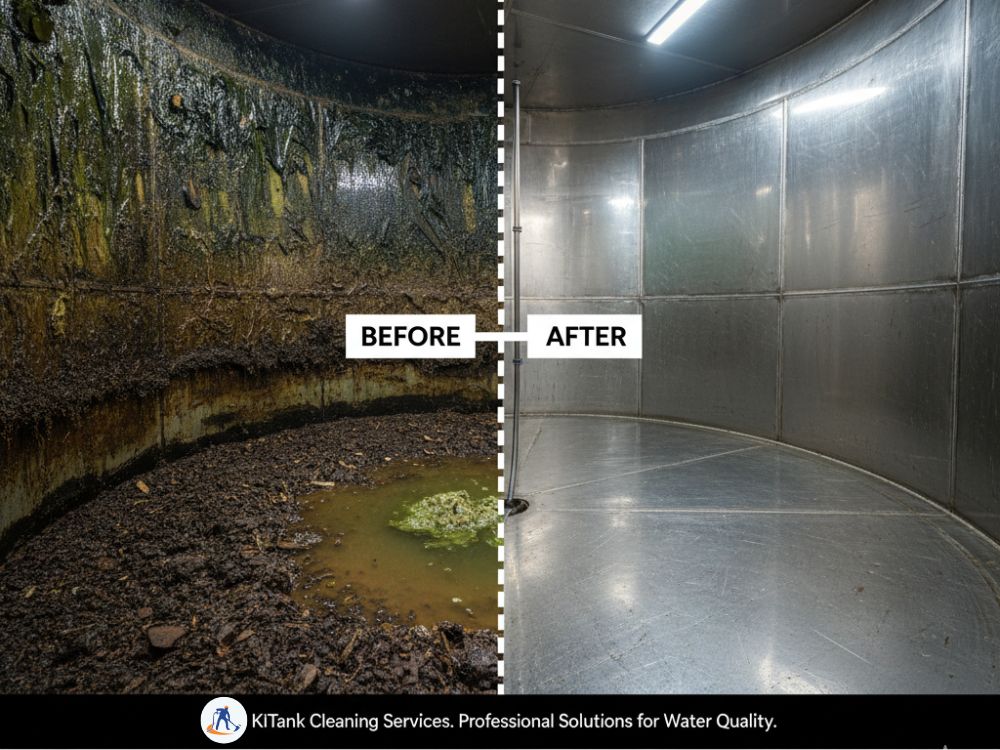
- The Sign: A look inside the tank reveals a thick layer of dark sludge at the bottom, floating debris, or a slimy, greenish-black coating on the interior walls. You may also see particles in a glass of water held up to the light.
- The Cause: Sludge is the accumulation of dust, dirt, rust, and organic matter over time. Biofilm is a thin, slimy colony of bacteria that adheres to surfaces, creating a protective layer where harmful pathogens can multiply. It requires a professional deep cleaning to be fully removed.
- The Business Risk: Visible contamination is undeniable proof of neglect and a guaranteed failure during any health inspection. This exposes your business to fines from public health officials and potential shutdowns for non-compliance with Kenyan standards for safe water storage.
The Performance Problems: When Your System Fights Back
Sometimes, the signs aren’t in the water itself, but in how your building’s plumbing behaves. These symptoms of water tank issues are often misdiagnosed, costing time and money as the root cause in the tank gets worse.
Sign 3: Low Water Pressure & Frequent Clogging
Before you call a plumber or blame the municipal supply for trickling taps, look at your water tank.
- The Sign: You notice a persistent, building-wide drop in water flow. Your maintenance team is constantly cleaning clogged tap aerators, showerheads, or intake valves on equipment like coffee machines and ice makers.
- The Cause: Sediment, scale, and flakes of biofilm break loose from the tank and get pulled into your plumbing. This debris creates blockages at the tank’s outlet or at fixture endpoints that choke the water flow throughout your building.
- The Business Risk: Low water pressure is more than an annoyance. It’s an operational bottleneck that increases maintenance costs and causes expensive equipment downtime. This directly impacts your bottom line through higher repair bills and lost productivity.
| Symptom Experienced in Your Business | Likely Root Cause in the Water Tank |
| Clogged tap aerators & showerheads | Fine silt and rust particles |
| Malfunctioning toilet cisterns | Debris blocking the fill valve |
| Equipment (coffee machine) failure | Scale and sludge buildup in water lines |
Sign 4: Pest Infestations or Leaks Around the Tank
Your water tank should be a completely sealed system. Any sign of pests or leaks is a major red flag indicating a breach in its integrity.
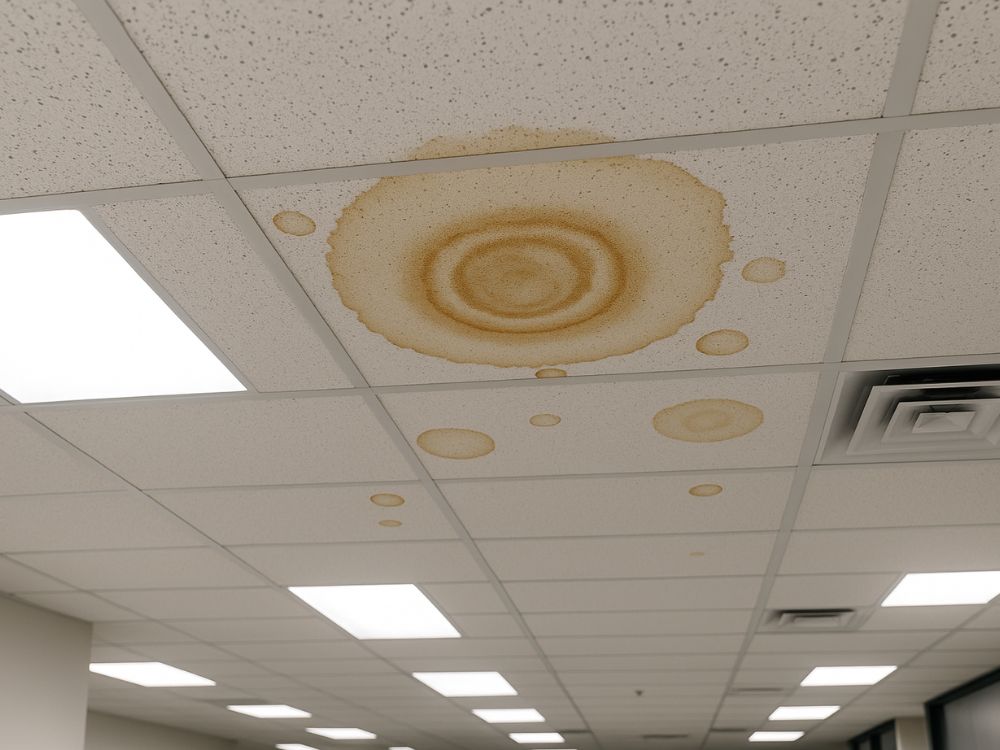
- The Sign: You find insects, larvae, or rodent droppings on or around the tank. Alternatively, you see unexplained damp patches, mold growth, or water stains on the ceiling or walls below. A sudden, sustained increase in your water bill can also point to a hidden leak.
- The Cause: Cracks in the tank body or improperly sealed access lids create a two-way street. They let treated water out and allow pests, dust, and other contaminants in, compromising your entire water supply.
- The Business Risk: An unsealed tank is a severe health code violation. Leaks represent a direct financial loss (wasted water) and can lead to catastrophic structural damage, requiring expensive mold remediation and property repairs.
The High-Stakes Warnings: Health, Safety & Compliance
These signs are the most serious and require immediate action, as they pose direct risks to human health and your business’s legal standing.
Sign 5: Frequent Illnesses Among Staff or Customers
This is the most alarming sign and represents a clear and present danger to public health that requires immediate professional intervention.
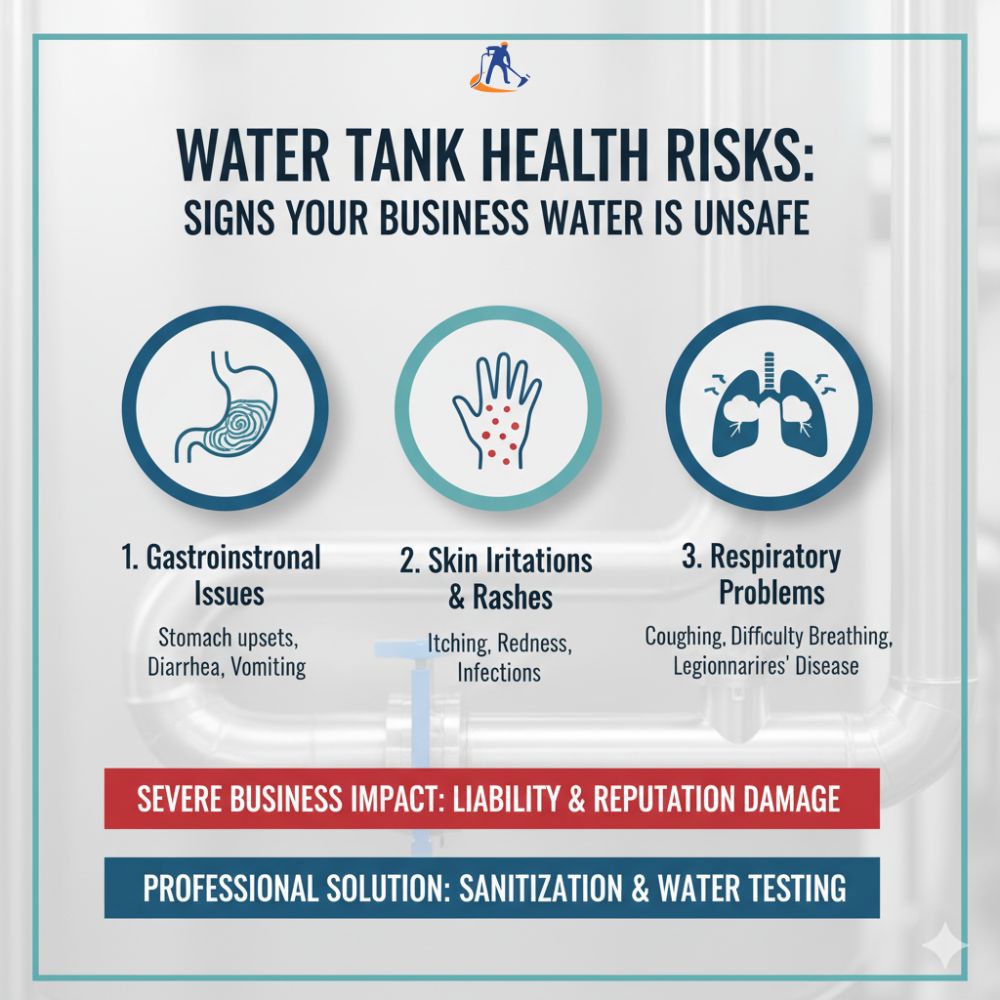
- The Sign: You notice an unusual and unexplained increase in health issues, particularly gastrointestinal problems (stomach cramps, diarrhea, nausea), skin irritations, or respiratory problems among people who regularly consume water at your facility
- The Cause: A dirty water tank is a perfect breeding ground for dangerous waterborne pathogens. These can include bacteria like E. coli and Salmonella, as well as Legionella (which causes the severe respiratory illness known as Legionnaires’ disease).
- The Business Risk: This is the most severe risk your business can face. It poses a direct threat to human life and can lead to devastating legal action, massive liability claims, forced shutdowns by health authorities, irreversible damage to your reputation, and a significant loss of customer trust.
If you suspect a link between water quality and health issues on your premises, you must act immediately. Contact a professional water sanitation service for emergency testing and cleaning.
Sign 6: Your Last Cleaning Was Over a Year Ago (Or Never)
Even if you don’t see obvious visible symptoms of contamination, the absence of action in your maintenance records is itself the biggest warning.
- The Sign: Your maintenance logs show it has been more than 12 months since the last professional cleaning and disinfection, or worse, there is no record of it ever being done.
- The Cause: Contamination is a gradual process. Biofilm, sediment, and bacteria don’t appear overnight. They accumulate steadily over time, even in a well-sealed tank. Waiting for a visible problem means the contamination is already well-established.
- Business Impact: Proactive maintenance is always cheaper than reactive emergency repairs. Neglecting a regular cleaning schedule is a clear compliance risk and guarantees that contamination is silently compromising your water quality. We recommend establishing a proactive maintenance schedule based on your facility’s needs.
| Facility Type | Recommended Cleaning Frequency |
| Hospitals & Healthcare | Every 6 months |
| Hotels, Restaurants & Food Processing | Every 6-12 months |
| Schools & Universities | Annually (Every 12 months) |
| Office Buildings & Apartments | Annually (Every 12 months) |
Sign 7: After Major Plumbing Work or a Contamination Event
Certain events automatically compromise your water system and require an immediate professional cleaning, regardless of your regular cleaning schedule.
- The Sign: Your facility has recently undergone major plumbing repairs, a new tank installation, or there has been a known contamination event in the municipal supply (e.g., a burst main reported in your area).
- The Cause: New plumbing introduces dirt, solder, and bacteria into the lines. A municipal breach can introduce untreated groundwater. These contaminants settle and fester in your tank.
- The Business Risk: Ignoring a post-event cleaning can cause a sudden and severe drop in water quality, turning your tank into a reservoir of contaminants that can take weeks to flush out without professional intervention.
Why Professional Cleaning is a Smart Business Investment
Investing in professional commercial water tank cleaning services is a smart decision for risk management, operational continuity, and brand protection. While a DIY approach may save money upfront, the long-term benefits of professional services far outweigh the initial cost.
- Ensure Regulatory Compliance: Professional cleaning helps you meet and exceed the health and safety standards set by Kenyan authorities, protecting you from fines, legal issues or operational shutdowns.
- Protect Your Brand Reputation: Clean, safe water is a fundamental expectation for customers and employees. Proactively maintaining your water supply demonstrates a commitment to health and safety, building trust with customers and safeguarding your brand’s reputation.
- Prevent Costly Repairs: Regular professional cleaning helps identify and address minor issues like corrosion, sediment buildup, or leaks before they escalate into major, expensive repairs. By removing harmful sediment and sludge, you prevent costly damage to your entire plumbing system and water-dependent appliances, saving thousands in the long run.
- Guaranteed Thoroughness & Safety: Professional services use specialized equipment (like high-pressure jets and wet vacuums) and expertise to access hard-to-reach areas, apply professional-grade cleaning agents, and dispose of contaminants safely. This ensures a level of thoroughness and safety that is difficult to achieve with DIY methods.
What to Expect: The KiTank Professional Water Tank Cleaning Services Process
A professional service like KiTank Cleaning follows a systematic procedure for commercial water tank cleaning to guarantee a safe, thorough, and hygienic result.
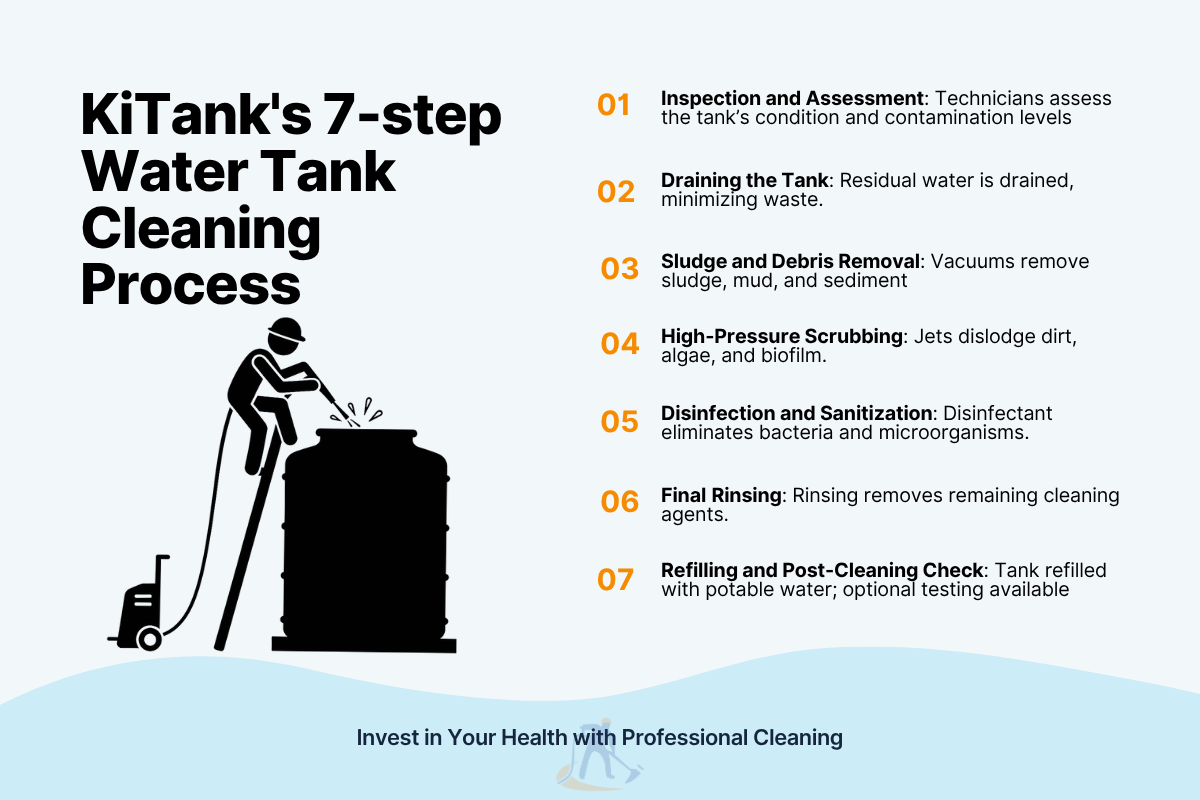
- Initial Inspection: Technicians assess the tank’s condition to plan the cleaning.
- Safe Draining: The tank is completely drained in an environmentally compliant manner.
- Sludge Removal: All solid sludge, mud, and debris are physically removed.
- High-Pressure Washing: The interior surfaces (walls, floor, ceiling) are thoroughly cleaned with high-pressure jets to dislodge all grime and biofilm.
- Disinfection: The interior is treated with an industry-approved disinfecting solution to eliminate bacteria, viruses, and pathogens.
- Final Rinse & Refill: The tank is rinsed to remove all traces of the cleaning solution before being refilled with fresh water.
- Post-Cleaning Report: You receive a detailed service report for your maintenance and compliance records.
Conclusion: Don’t Wait for a Crisis—Secure Your Water Supply Today
A proactive approach to water tank maintenance is the mark of a well-managed and responsible business. A clean water tank is not a cost; it’s an investment in safety and continuity. The signs are clear: from discolored water and bad smells to low pressure and overdue service logs. Each is a warning that your critical water asset needs attention.
If your business is showing one or more of these signs, don’t wait for a small issue to become an expensive, reputation-damaging crisis. Protect your reputation, your equipment, your peace of mind, and the health of your staff and clients.
Contact KiTank Cleaning today to schedule a professional assessment for water tank cleaning and receive a no-obligation quote to secure your business’s water supply.
Call or WhatsApp us at: 0729 735 245 or fill out our online form to book your cleaning service!
