

Water disinfection methods are a critical component of any water treatment plan designed to eliminate pathogens, prevent waterborne diseases, and guarantee safe drinking water. Within the broader field of water purification, the three leading disinfection methods are chlorine, UV, and ozone.
The conventional approach to water disinfection relies on chlorine, a cost-effective choice known for providing residual protection. In contrast, UV light offers a chemical-free solution that neutralizes microbes without altering the water’s taste. The third option, ozone, is a powerful oxidizer used in advanced water treatment to handle a wide range of contaminants.
This guide provides a comprehensive water treatment comparison, exploring the strengths and weaknesses of chlorination, UV disinfection, and ozonation to help you determine the best solution for your needs.
Why Water Disinfection Matters
Water disinfection kills or inactivates disease-causing microorganisms, or pathogens, in a water supply to make it safe to drink. This process is the critical final barrier in water treatment, eliminating any pathogens that survive earlier stages like filtration. As one of the most significant public health advancements of the 20th century, disinfection has drastically reduced waterborne diseases.
Disinfection primarily targets three types of pathogens:
- Bacteria, such as Escherichia coli (E. coli), Salmonella (typhoid fever), and Vibrio cholerae (cholera).
- Viruses, including Hepatitis A, Norovirus, and Rotavirus, which cause severe gastrointestinal illness.
- Protozoa, like Giardia lamblia and Cryptosporidium parvum, parasites protected by a durable outer cyst that can resist some disinfectants.
Consuming contaminated water can lead to waterborne diseases with symptoms ranging from mild gastroenteritis to life-threatening conditions like cholera, typhoid, and dysentery. These illnesses pose particular risks to vulnerable populations, including children, the elderly, and individuals with compromised immune systems.
Regular disinfection is a critical part of maintaining a water tank, especially one that stores drinking water. While sedimentation and filtration are crucial for removing large particles and some contaminants, they may not eliminate all pathogens. Disinfection provides an additional layer of safety by killing or inactivating harmful microorganisms, ensuring the water is microbiologically safe for consumption and preventing the spread of waterborne diseases.
“KiTank Cleaning Services recommends you clean and disinfect your water tank every 6 to 12 months. However, more frequent disinfection is necessary if you notice signs of contamination, after the tank has been significantly altered, or following an extended period of disuse.”
Learn more: How to Clean and Disinfect a Water Storage Tank
Chlorine Disinfection
Chlorination is the most widely used water disinfection method globally, trusted for its reliability, affordability, and ability to provide lasting protection
How It Works
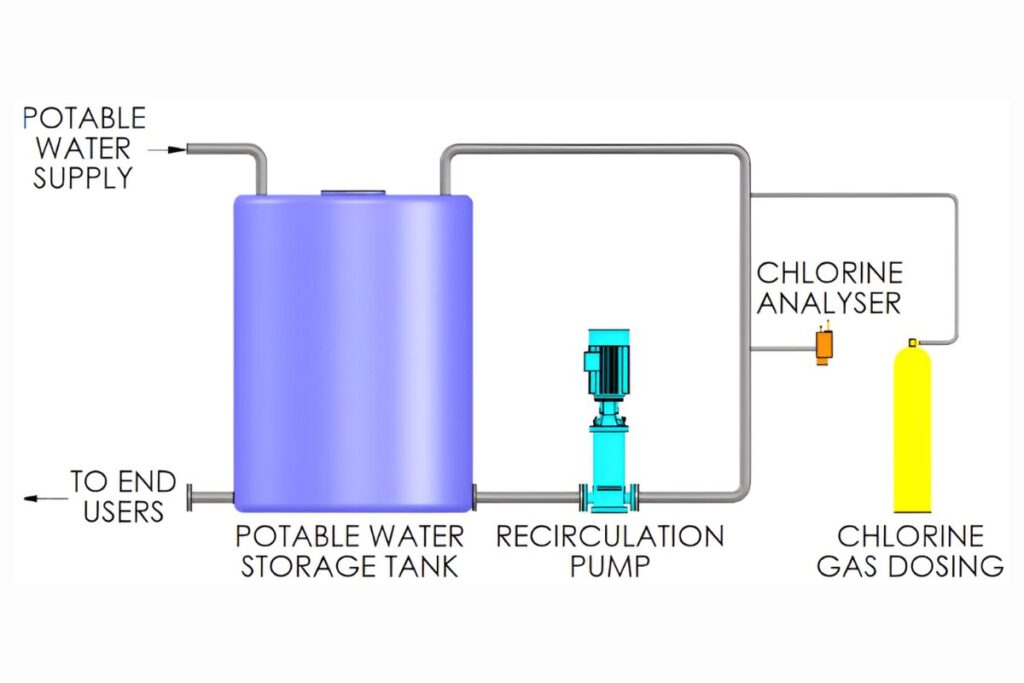
When chlorine is added to water (as a gas or in liquid hypochlorite form), it creates hypochlorous acid (HOCl). This potent oxidizing agent penetrates microorganisms like bacteria and viruses, destroying their cellular structures and rendering them harmless.
Advantages of Chlorination
- Provides Residual Protection: This is chlorine’s most significant advantage. A small amount of “free chlorine” remains in the water as it travels through pipes, continuously protecting it from recontamination right up to your tap.
- Highly Cost-Effective: Chlorine is inexpensive and readily available, making it the most economical choice for treating large volumes of water.
- Proven Effectiveness: It is highly effective at killing a broad spectrum of common bacteria and viruses that cause diseases like cholera and typhoid.
- Controls Biofilm: It helps prevent the buildup of slime (biofilm) inside water pipes and storage tanks.
Disadvantages and Concerns
- Forms Disinfection Byproducts (DBPs): Chlorine can react with organic matter in water to form potentially harmful compounds like trihalomethanes (THMs).
- Limited Efficacy: Less effective against robust protozoan cysts like Cryptosporidium and Giardia.
- Taste and odor issues: Chlorine can impart an unpleasant taste and odor to the water.
- Corrosive: Chlorine can be corrosive to some plumbing materials over time.
- Safety Hazards: As a toxic chemical, chlorine requires careful handling, storage, and transport.
Best suited for: Large municipal water treatment plants where protecting a vast distribution network from recontamination is the top priority..l
UV (Ultraviolet) Disinfection
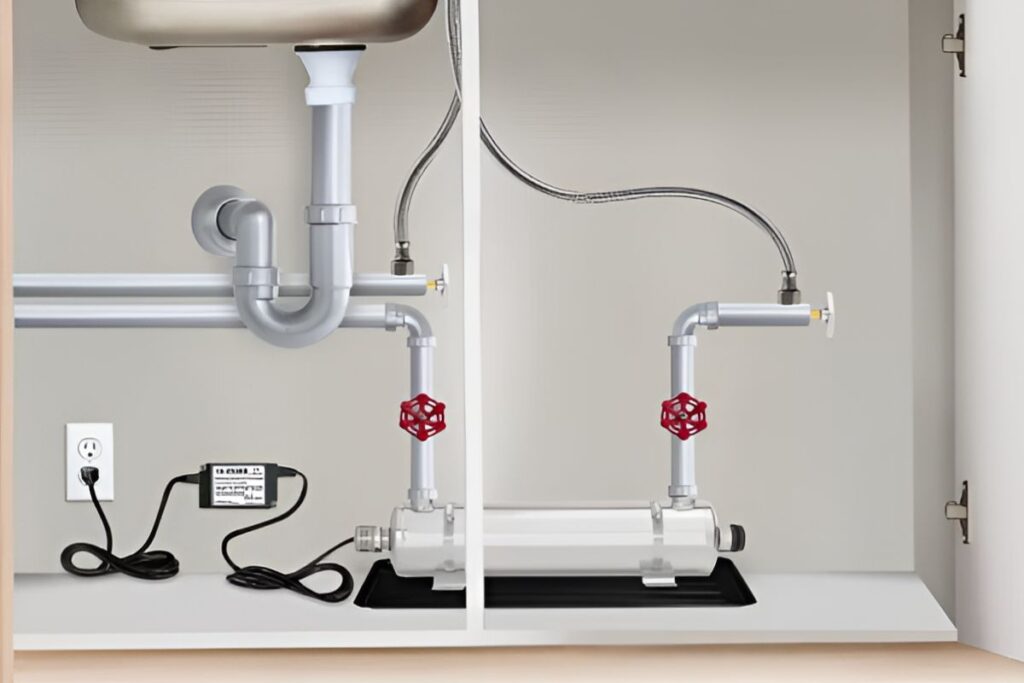
UV disinfection is a physical, chemical-free process that purifies water without adding any chemicals, making it a popular choice for homes and facilities where chemical purity is essential.
How UV water disinfection works:
UV water disinfection systems work by exposing water to UV-C light at a specific wavelength (254nm), which penetrates the cell membranes of microorganisms and damages their DNA and RNA, effectively rendering them unable to reproduce and causing disease.
Pros of UV Disinfection
- Extremely Effective: UV light is highly effective at inactivating a wide range of pathogens, including the chlorine-resistant cysts Cryptosporidium and Giardia.
- No Chemicals or DBPs: It adds nothing to the water, so it does not create any harmful disinfection byproducts or affect the taste and odor.
- Fast-Acting: Disinfection occurs almost instantly as water flows past the UV lamp.
- Safe and Environmentally Friendly: There are no toxic chemicals to handle or store
Cons and Limitations of UV Disinfection
- No residual disinfection: UV disinfection doesn’t provide a lasting disinfection effect in the water system.
- Requires Clear Water: The UV light must be able to reach the microbes. Turbidity (cloudiness) or suspended solids can shield pathogens, reducing effectiveness. Pre-filtration is almost always required.
- Power and Maintenance Dependent: Requires a continuous electricity supply. The UV lamp needs annual replacement, and the quartz sleeve that houses it requires regular cleaning to ensure optimal performance.
Best suited for: Point-of-use systems (like under-sink filters), private well water treatment, and as a secondary disinfectant in larger systems to target chlorine-resistant microbes.
Ozone Water Treatment
Ozone (O3) is a highly reactive gas and one of the most powerful disinfection agents used in water treatment.
How Ozonation Works
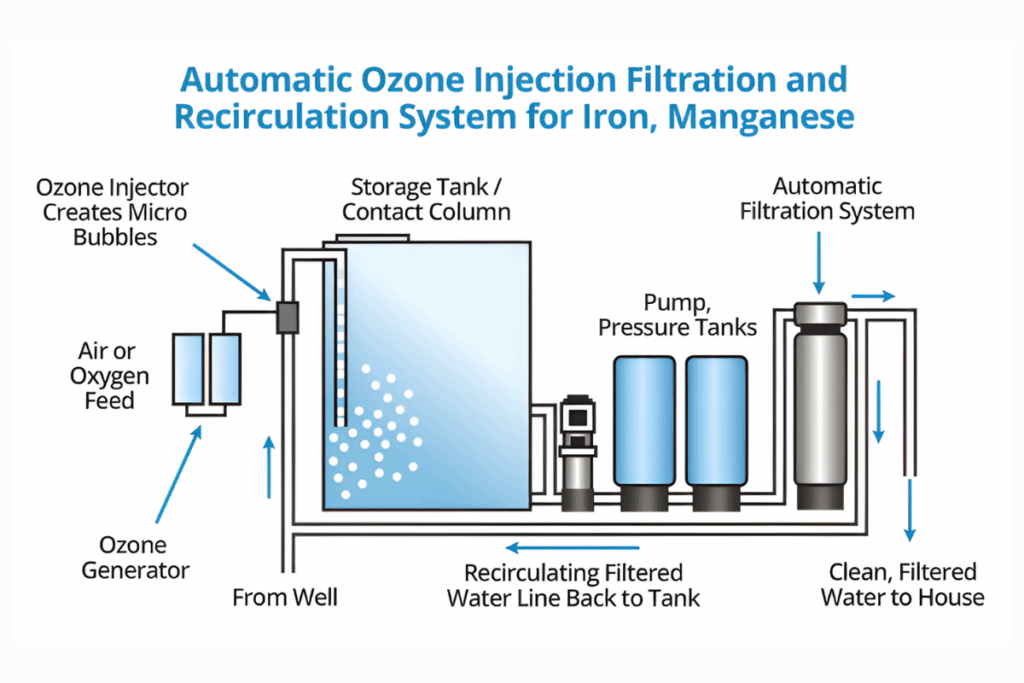
Ozone is generated on-site by passing oxygen through a high-voltage field and is then bubbled into the water. As a powerful oxidant, it rapidly destroys microorganisms by rupturing their cell walls.
Benefits Of Ozone Water Treatment
- Extremely Powerful: Works much faster than chlorine and is highly effective against all pathogens, including viruses and cysts.
- Improves Water Quality: In addition to disinfection, it effectively removes unwanted tastes, odors, and colors by oxidizing contaminants like iron and manganese.
- No Chemical Taste: Ozone quickly decomposes back into oxygen, leaving no chemical residue or taste.
- No Harmful Byproducts: Unlike chlorine, it leaves no chemical residue in the treated water.
Disadvantages and Practical Challenges
- No Residual Protection: Like UV, it provides no lasting disinfection and requires a secondary disinfectant for distribution systems.
- High Cost & Complexity: Ozonation systems have very high capital and energy costs and require skilled personnel to operate.
- Potential Byproduct Formation: If bromide is present in the source water, ozone can form bromate (BrO3−), a potential carcinogen that must be monitored.
Best Suited For: Large-scale, advanced water treatment plants where superior water quality is a top priority and budget allows.
Safety First: Due to the potential hazards of ozone gas, proper system design, installation, and maintenance are critical when implementing ozonation.
Chlorine vs. UV vs. Ozone Comparative Analysis
| Feature | Chlorine | UV (Ultraviolet) | Ozone |
| Mechanism | Chemical oxidation | Physical (DNA/RNA damage) | Chemical oxidation |
| Effectiveness | Good (less on cysts) | Excellent | Superior |
| Residual Effect | Yes | No | No |
| DBP Formation | High potential (THMs) | None | Low potential (Bromate) |
| Taste/Odor | Can cause chemical taste | No impact | Improves taste/odor |
| Cyst Inactivation | Poor | Excellent | Excellent |
| Capital Cost | Low | Medium | High |
| Operating Cost | Low | Medium | High |
| Safety Concerns | Chemical handling, DBPs | Mercury in lamps | Ozone gas toxicity |
How to Choose the Best Disinfection Method for Your Needs
There is no single “best” disinfection method; the ideal choice is always context-dependent. It hinges on factors like your source water quality, the intended use of the water, and your budget.
Key Considerations to Guide Your Choice
To select the best water treatment method, evaluate your situation by asking these key questions:
- Do I need residual protection? A residual prevents microbial regrowth as water travels through distribution pipes. Chlorine provides long-lasting residual disinfection, while UV and ozone do not.
- What is my source water quality? Factors like turbidity, pH, and organic content impact each method’s performance. For example, UV disinfection requires clear water to be effective, whereas chlorine and ozone can handle higher turbidity.
- What is my budget and scale? Chlorine is cost-effective for large-scale water treatment, while UV systems, with moderate upfront costs and low operational expenses, are better suited for smaller applications. Ozone disinfection, though powerful, is expensive and typically used for specialized needs.
- What is the contaminant load? Identify the specific contaminants (e.g., bacteria, viruses, protozoa) and their concentration. UV and ozone, for example, are highly effective against chlorine-resistant protozoa like Cryptosporidium, while chlorine is less so.
- Are there any regulations or standards? Consult local and national health regulations for disinfection requirements, including approved methods, mandatory residual levels, and maximum allowable disinfection byproducts.
The Multi-Barrier Strategy: Combining Disinfection Methods for Safety
Modern advanced water treatment employs a multi-barrier approach, utilizing a combination of complementary disinfection methods to ensure water safety. This strategy, where primary and secondary disinfectants are used, provides robust protection against various pathogens and prevents recontamination as water moves through the distribution system.
Examples of Combined Disinfection Processes
- Primary Disinfection (Ozone or UV): Ozone or UV light are effective at rapidly inactivating a wide range of pathogens, including bacteria, viruses, and protozoa.
- Secondary Residual Disinfection (Chlorine/Chloramines): After the primary disinfection step, a chlorine-based disinfectant (chlorine or chloramines, a less reactive chlorine compound) is added to provide a persistent disinfectant residual that travels throughout the entire water distribution system, safeguarding against microbial regrowth.
This multi-barrier strategy maximizes pathogen destruction while minimizing the formation of harmful DBPs.
Recommendations by Application:
- For Large Municipal Systems: A combination of primary disinfection (UV or Ozone) followed by secondary chlorination is the gold standard for balancing power, safety, and residual protection.
- For Industrial & Commercial Use: The choice depends on the need. A beverage plant may choose UV to avoid chemical tastes, while a cooling tower would use chlorine for its biofilm control.
- For Homeowners (especially those using well water): A UV system installed at the point of entry is an excellent, chemical-free choice to ensure microbiological safety. It is often paired with sediment and carbon pre-filters to ensure water clarity and remove other contaminants before UV treatment.
The Future of Water Disinfection: Advanced Oxidation Processes (AOPs)
Advanced Oxidation Processes (AOPs) represent a key advancement in water disinfection. These technologies combine powerful oxidants, like ozone and hydrogen peroxide, with energy sources like UV light to create highly reactive hydroxyl radicals.
AOPs offer significant benefits, including the effective removal of persistent organic pollutants, strong disinfection capabilities, and a reduction in harmful disinfection byproducts compared to some traditional methods. However, challenges remain, such as high energy consumption, potential byproduct formation, and high initial and operating costs. Ongoing research aims to improve their efficiency and sustainability.
Safeguarding Water from Source to Tap
Choosing the right water disinfection method, or a strategic combination, is crucial for ensuring safe and clean drinking water, and the decision depends on factors like water quality, intended use, and cost considerations. Chlorine offers cost-effective, residual protection for cities. UV provides safe, chemical-free purification for homes. Ozone delivers superior, high-quality treatment for advanced facilities. A combination of methods often provides the most robust and reliable disinfection.
However, disinfection is only the beginning.
The Final Step: Ensuring Clean Water Storage

Effective purification is undone if water is stored improperly. Methods like UV and ozone provide no residual protection, meaning clean water can easily become re-contaminated if stored in a dirty tank. Algae, sediment, and biofilm in a water tank can harbor bacteria and undo all the hard work of your purification system.
For residents and businesses in Kenya, ensuring your water storage tank is professionally cleaned is a critical step in the water safety chain. KiTank Cleaning offers professional, hygienic water tank cleaning services to ensure the water you store remains as pure as when it was first treated.
Secure your family’s health—contact KiTank Cleaning today to schedule a professional water tank disinfection and cleaning.
