
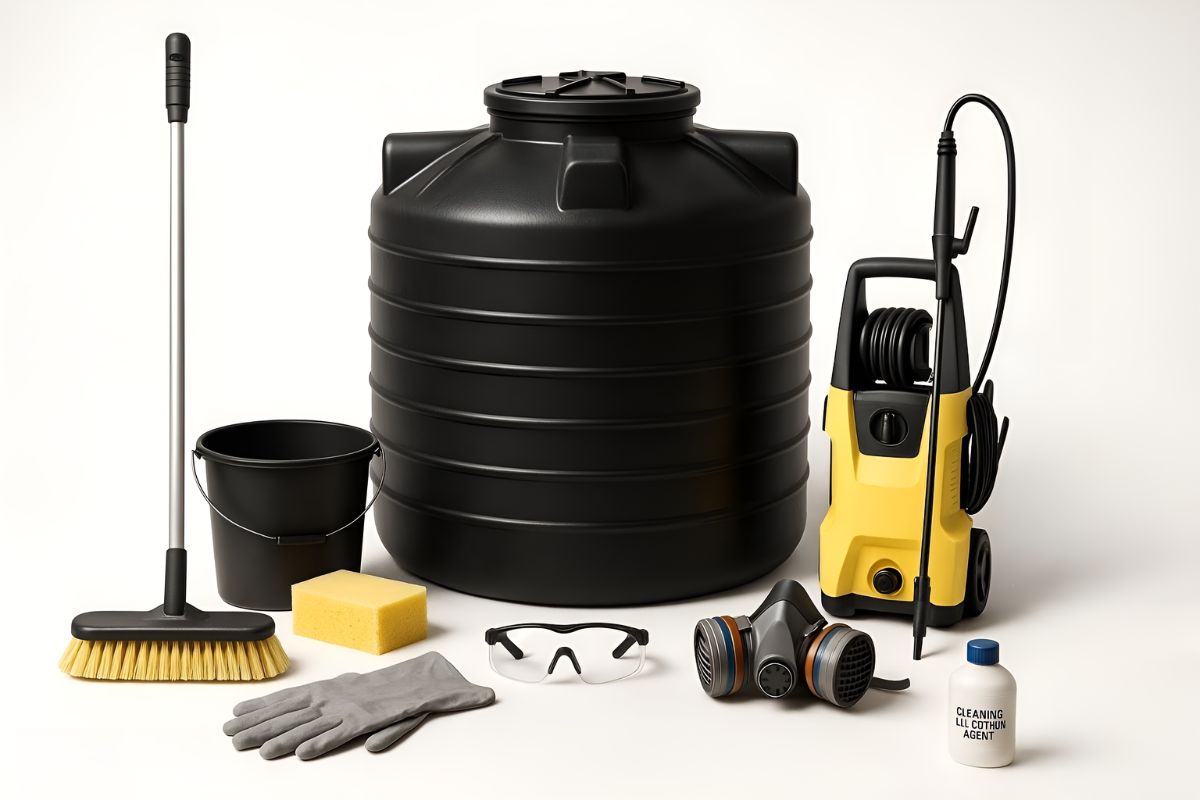
Maintaining a clean water tank is crucial for safeguarding health, preventing waterborne diseases, and extending the lifespan of your plumbing system. Over time, tanks accumulate harmful contaminants like sediment, algae, bacteria, and rust. To effectively remove this buildup, you need the right tools and equipment.
This guide will walk you through the essential tools and equipment needed to properly clean a water tank, whether doing it yourself or hiring a professional service. We’ll demystify the process and highlight the right equipment for the job.
Why Proper Equipment is important
Using the correct tools isn’t just about making the job easier; it’s about ensuring the water you use is truly safe.
- Removes Harmful Contaminants: Specialized equipment is necessary to effectively remove stubborn sludge, algae, and biofilm, which can host harmful bacteria and cause gastrointestinal issues.
- Improves Water Quality: A thorough cleaning eliminates the sources of foul tastes and odors, ensuring your water is fresh and pleasant to use.
- Prevents Waterborne Diseases: By eradicating bacteria and viruses from your tank, you protect your household from diseases like cholera and typhoid.
- Extends Tank Lifespan: Removing corrosive materials and sediment buildup prevents damage and can add years to the life of your water tank.
Safety First: Your Essential PPE Checklist
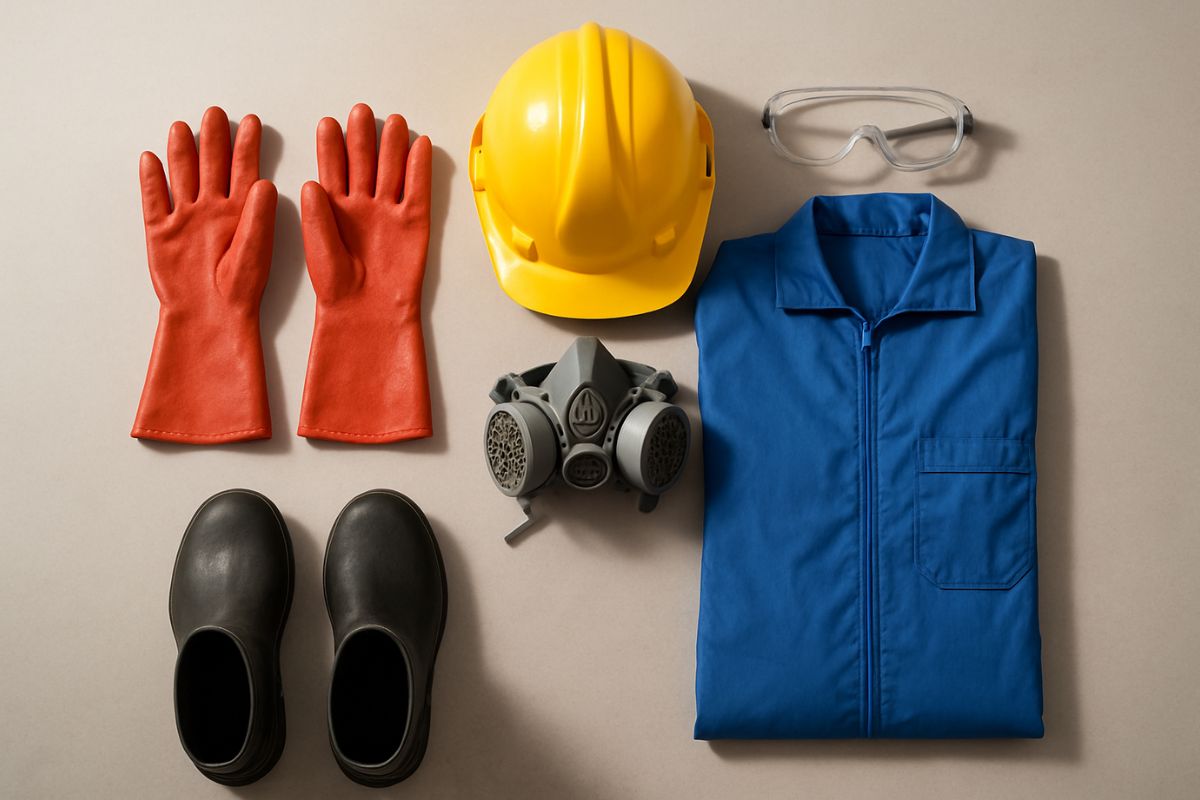
Before you begin any cleaning, prioritizing safety is mandatory. Cleaning a water tank is a hazardous activity, and proper Personal Protective Equipment (PPE) is mandatory for any job.
Mandatory PPE for ALL Tank Cleaning Tasks
Whether you are a homeowner or a professional, the following safety gear is essential:
- Waterproof Gloves, Overalls, and Gumboots: To protect your skin from contaminated water and cleaning chemicals.
- Safety Goggles: To shield your eyes from splashes.
- Respirator Mask (N95 or better): To prevent inhaling harmful bacteria, mold spores, or chemical fumes.
- Headlamp or Waterproof Torch: Crucial for visibility to work safely and inspect your progress inside a dark tank.
Specialized Safety Gear for Confined Space Entry (Professionals Only)
Confined space entry, involving large, underground, or poorly ventilated tanks, requires specialized safety equipment due to inherent dangers like oxygen deficiency and toxic fumes. This should only be performed by certified professionals. Their specialized gear includes:
- Multi-Gas Detectors: Monitors the air for safe oxygen levels and dangerous gases like carbon monoxide and hydrogen sulfide.
- Tripod, Winch & Safety Harness: A retrieval system set up over the entry point to safely lower and extract a technician, especially in an emergency.
- Portable Ventilation Blowers/Exhaust Fans: Used to force fresh air into the tank and remove hazardous fumes.
The DIY Toolkit: Equipment for Cleaning Small Residential Tanks
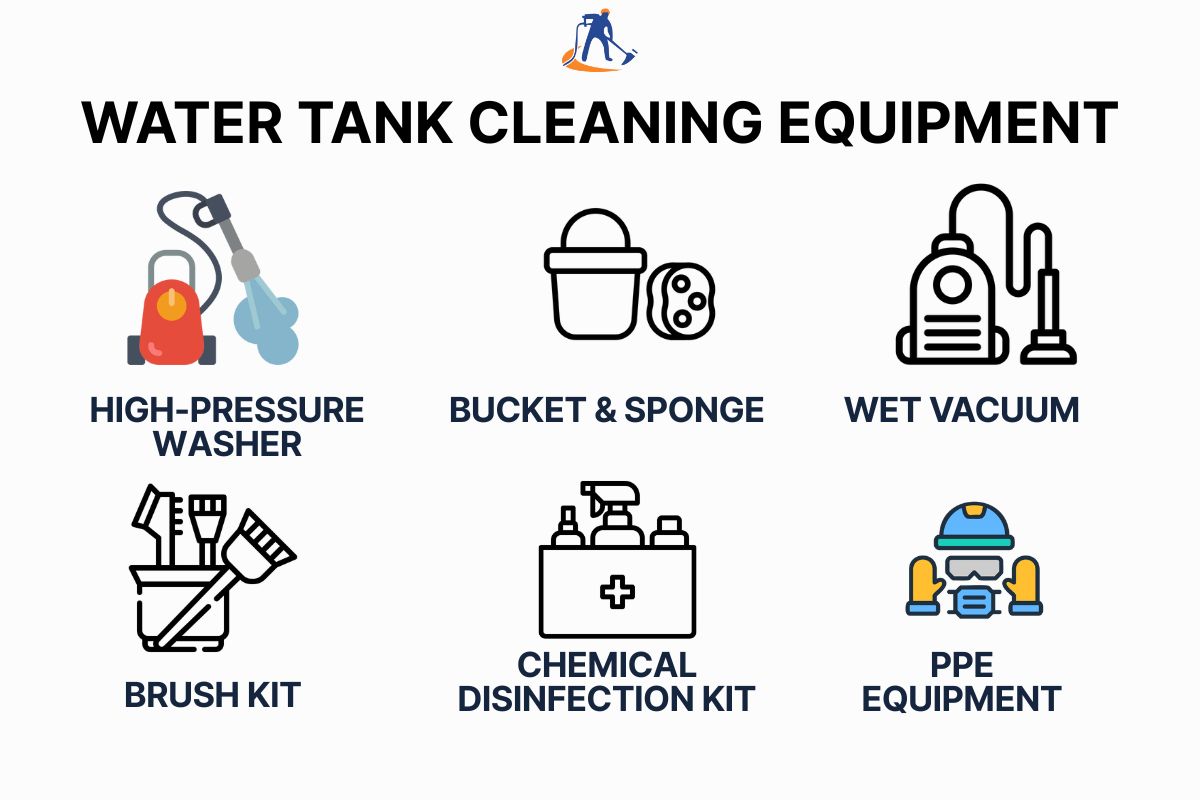
For homeowners with smaller, accessible plastic tanks (under 2,000 litres) with light contamination, a DIY clean can be a cost-effective way to maintain your water storage system. Here’s a complete DIY water tank cleaning supplies checklist to help you complete the task safely and efficiently:
Essential Manual Cleaning Tools and Supplies
- Brushes: You’ll need a long-handled brush with stiff bristles for the walls and a smaller handheld brush for corners and fittings.
- High-Pressure Hose Nozzle: A standard garden hose fitted with a high-pressure nozzle helps dislodge grime and rinse the tank thoroughly.
- Buckets, Scoops & Squeegee: Used to manually remove the final sludge at the bottom and push remaining water toward the drain.
- Scraper: A plastic scraper is effective for dislodging hardened mineral deposits without damaging the tank’s interior.
Cleaning Agents & Disinfectants
For safe tank cleaning and disinfection, choose agents based on tank material and contamination type.
- Detergents and Degreasers: Mild detergents can help lift general dirt. For oily residues, a degreaser is more effective. Ensure it is thoroughly rinsed out.
- Household Bleach (Sodium Hypochlorite): A powerful disinfectant. Use with extreme caution. A safe dilution is one part bleach to 100 parts water. Never mix bleach with other cleaners, as this can create toxic gas. Rinse the tank multiple times until the chlorine smell is gone.
- Eco-Friendly Cleaners: Hydrogen peroxide-based solutions are a safer alternative, as they break down into just oxygen and water. For removing mineral deposits, white vinegar is a reliable natural, non-toxic option.
- Chlorine Test Strips: After disinfecting, use these to ensure chlorine levels have returned to a safe level (below 4 parts per million) before using the water.
- Specialized Cleaners: Heavy mineral deposits, rust, or organic matter may require specialized alkaline or acid cleaners. These products are potent, so handle them with care. Always follow the manufacturer’s safety guidelines and confirm the product is compatible with your tank.
With this basic set of tools and supplies, you’ll be well-equipped to tackle the draining, scrubbing, and rinsing steps of DIY water tank cleaning while keeping safety in mind.
Advanced Machinery: The Equipment Professionals Use
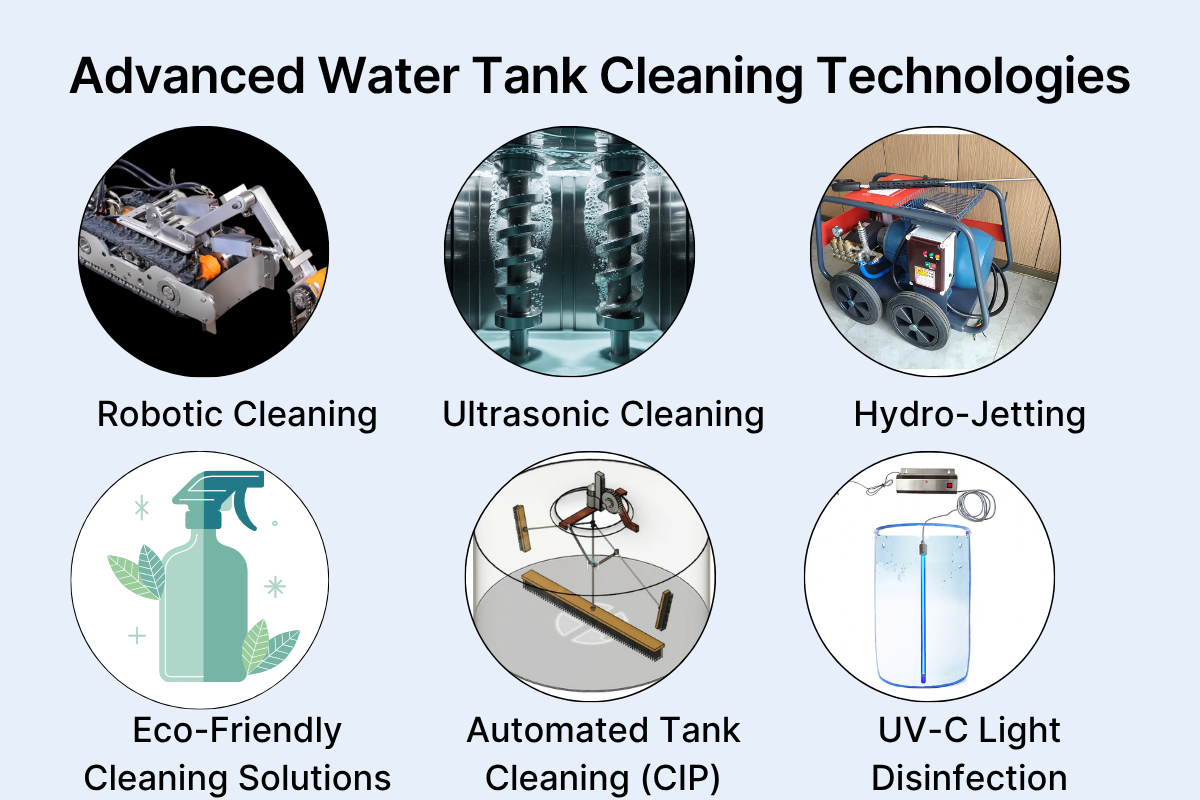
Professional water tank cleaning services achieve remarkable results quickly by utilizing industrial-grade machines far more powerful than any homeowner’s equipment. These tools are essential for thoroughly and safely cleaning large, heavily contaminated underground tanks or tanks over 2,000 liters.
Advanced Cleaning Machinery
- High-Pressure Water Jetters: Professionals use industrial-grade pressure washers that blast water at up to 40,000 PSI. This immense force strips away caked-on sludge, rust, and stubborn algae that manual scrubbing cannot remove.
- Industrial Sludge Vacuums & Dewatering Pumps: Instead of manually scooping sludge, pros use powerful dewatering pumps to empty the tank and industrial “sludge suckers” to vacuum out all remaining sediment, leaving the surface perfectly clean and dry for disinfection.
Specialized Equipment
- Video Inspection Equipment: Cameras and probes with integrated lighting are used to inspect the tank’s interior before and after cleaning, identifying cracks, corrosion, and any missed spots.
- Clean-in-Place (CIP) Systems: Designed to clean internal surfaces of tanks and process lines without disassembly, using spray washing or fill-and-drain methods. They can be stationary or mobile.
Robotic and Remote Automated Systems
- Tank Cleaning Robots: Operated remotely, these machines are developed for heavy and hazardous industrial applications. Some models are even certified for explosive atmospheres completely removing personnel from danger.
- Remotely Operated Vehicles (ROVs): These submersible devices can inspect and clean water tanks without draining them. Equipped with cameras and vacuum systems, they remove sediment while the tank remains in service, saving water and time.
Sterilization & Disinfection Technology
- UV-C Radiation Lamps: After cleaning, a powerful UV-C lamp is used to sterilize all surfaces. This chemical-free method destroys the DNA of up to 99.9% of bacteria, viruses, and mold spores.
- Ozone Generators: In some advanced applications, ozone gas—a powerful oxidizing agent—is used to disinfect the tank. It effectively neutralizes contaminants before safely dissipating.
Professional water tank cleaning services in Nairobi, such as KiTank Cleaning, often use high-pressure jet cleaning, vacuum cleaning techniques, and approved disinfection methods to comply with local health regulations and standards from bodies like the Water Services Regulatory Board (WASREB) and the National Environment Management Authority (NEMA).
The KiTank 6-Stage Professional Cleaning Process and Tool Utilization
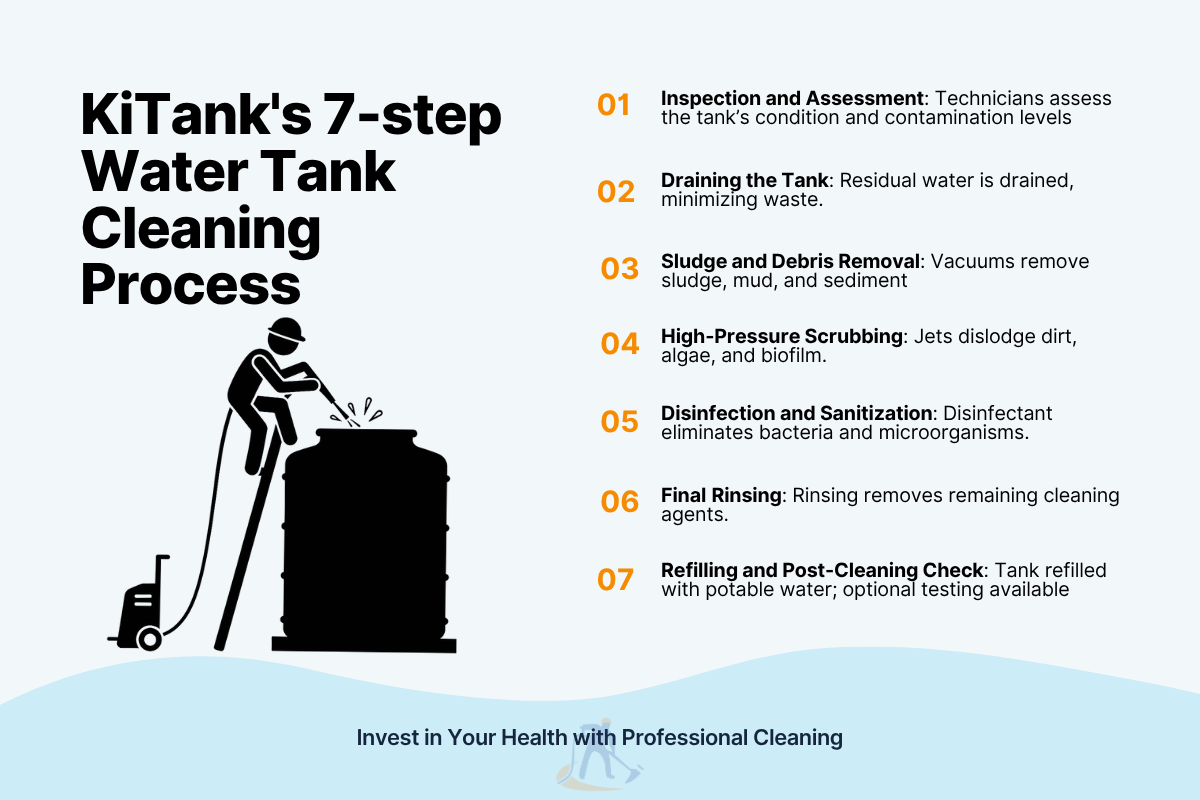
At KiTank Cleaning, our approach goes beyond simple scrubbing and rinsing. We utilize a mechanized process that systematically incorporates professional tools to ensure a comprehensive clean from start to finish:
- Mechanized Dewatering: We empty the tank completely using high-speed de-water pumps.
- Sludge Removal: With industrial sludge suckers to remove all settled dirt and debris.
- High-Pressure Cleaning: We use high-pressure water jet cleaners to deep clean the walls and ceiling, blasting away all contaminants.
- Vacuum Drying: We use dry or wet vacuums to eliminate residual contaminants, leaving the tank spotless and dry.
- Disinfection: We apply safe, approved anti-bacterial agents, often included in our chemical disinfection kits, to sterilize all interior tank surfaces.
- UV Radiation: We might use a UV lamp for final, chemical-free sterilization.
“The right tools don’t just clean; they ensure the water you use every day is safe and healthy.” – Water tank cleaning expert
DIY vs. Professional Cleaning: When to Hire an Expert
When considering whether to clean the tank yourself or hire a professional, it’s important to take into account the size of your tank, the level of contamination, and your ability to work safely.
At a Glance: DIY Methods vs. Professional Services
| Feature | DIY (Do-It-Yourself) Cleaning | Professional Service (e.g., KiTank Cleaning) |
| Best For | Small (< 2,000L), ground-level plastic tanks with light sediment. | Large, underground, concrete, or heavily contaminated tanks. |
| Effectiveness | Can remove surface dirt, but may leave behind microscopic bacteria. | Guarantees a deep, hygienic clean using mechanized equipment. |
| Safety | High risk if proper PPE and confined space procedures are not followed. | Professionals are trained and equipped for safe confined space entry. |
| Time & Effort | Very time-consuming and requires significant physical labor. | Fast and efficient, minimizing water supply downtime. |
| Cost | Lower upfront cost for tools. | Higher initial cost but provides better value and peace of mind. |
When should you ALWAYS call a professional?
You should always hire a professional service like KiTank Cleaning for:
- Large, deep, or underground tanks.
- Heavily contaminated tanks with thick layers of sludge or stubborn algae.
- Concrete tanks, whose porous surfaces require powerful tools for a deep clean.
- Any situation where you are not 100% confident in safety procedures or do not have the correct PPE.
Costs & Where to Buy Tank Cleaning Equipment in Kenya.
The cost of cleaning a water tank in Kenya varies significantly depending on whether you choose DIY methods or hire a professional service.
Estimated Costs for Common DIY Cleaning Tools (KES):
For those considering purchasing equipment, here is an estimated price range for common tools. Prices vary by brand, quality, and supplier.
- Brush or Scrubber: Ksh 200 – Ksh 500
- Bucket: Ksh 150 – Ksh 300
- Hose or Pressure Washer: Ksh 2,000 – Ksh 5,000
- Gloves and Boots: Ksh 300 – Ksh 800
- Disinfectant (e.g., chlorine): Ksh 100 – Ksh 500 per liter
- Ladder: Ksh 3,000 – Ksh 10,000
- Water Test Kit: Ksh 500 – Ksh 1,000
Total Estimated Cost: Ksh 5,250 – Ksh 16,600+ (Depends on the quality of tools and the need for a ladder).
Suppliers and Where to Buy
You can purchase water tank cleaning tools and equipment from several sources:
- Online Marketplaces (Jiji, Jumia, Kilimall): Best for general consumer tools and smaller-scale needs.
- Local Hardware Stores: Stock essential equipment for residential and small commercial use.
- Specialized Suppliers: The primary source for advanced water tank cleaning machines. They offer technical expertise and custom solutions for complex cleaning requirements.
While you can purchase or rent some cleaning equipment, industrial-grade machinery like high-pressure jetters and sludge vacuums is costly and requires training for safe operation. Therefore, hiring a professional service is a more cost-effective and safer solution for deep cleans. In Kenya, specialized companies such as KiTank Cleaning and BestCare use advanced tools to deliver thorough results, with services starting from approximately KSh 5,000–20,000 per tank based on size.
Maintenance Tips to Keep Your Tank Clean (Preventative Measures)
A thorough cleaning is the first step, but consistent maintenance is the key to ensuring your water remains safe and clean for the long term. Adopting a few best practices will extend the time between full cleanings and protect the quality of your water supply.
Maintenance Schedule
Regular inspection and cleaning are essential.
- Domestic Tanks: Clean every 6–12 months.
- Commercial & Industrial Tanks: Clean every 3–6 months.
- Rainwater Harvesting Tanks: Clean every 6 months, especially after heavy rain.
Proactive Prevention for Lasting Water Quality
- Secure the Lid: Ensure your tank cover is tight-fitting to keep out dust, pests, and debris.
- Filter the Inlet: Install a sediment filter on the tank’s inlet pipe to catch impurities before they enter.
- Block Sunlight: Position your tank in the shade if possible, as sunlight promotes algae growth.
- Inspect Regularly: Visually inspect your tank every six months and schedule a full professional cleaning at least once a year.
The Most Important Tool is Expertise
From a simple brush to a submersible robot, the range of water tank cleaning tools is vast. But a tool is only as effective as the person using it.
While a DIY clean can handle light surface dirt, it cannot match the hygienic, safe, and thorough results from a trained professional using mechanized equipment. Investing in a professional service is an investment in your health, ensuring the water your family consumes is genuinely safe.
Ready to ensure your tank is cleaned to the highest possible standard? Skip the risk and hassle. KiTank Cleaning Services offers convenience and peace of mind, delivers deep, safe, and regulation-compliant cleaning using modern equipment, skilled technicians, and strict safety protocols.
Contact KiTank Cleaning Services today to schedule your professional water tank cleaning service in Kenya.
Call or WhatsApp 0729 735 245 for a free consultation and quote or visit our booking page to request service.
