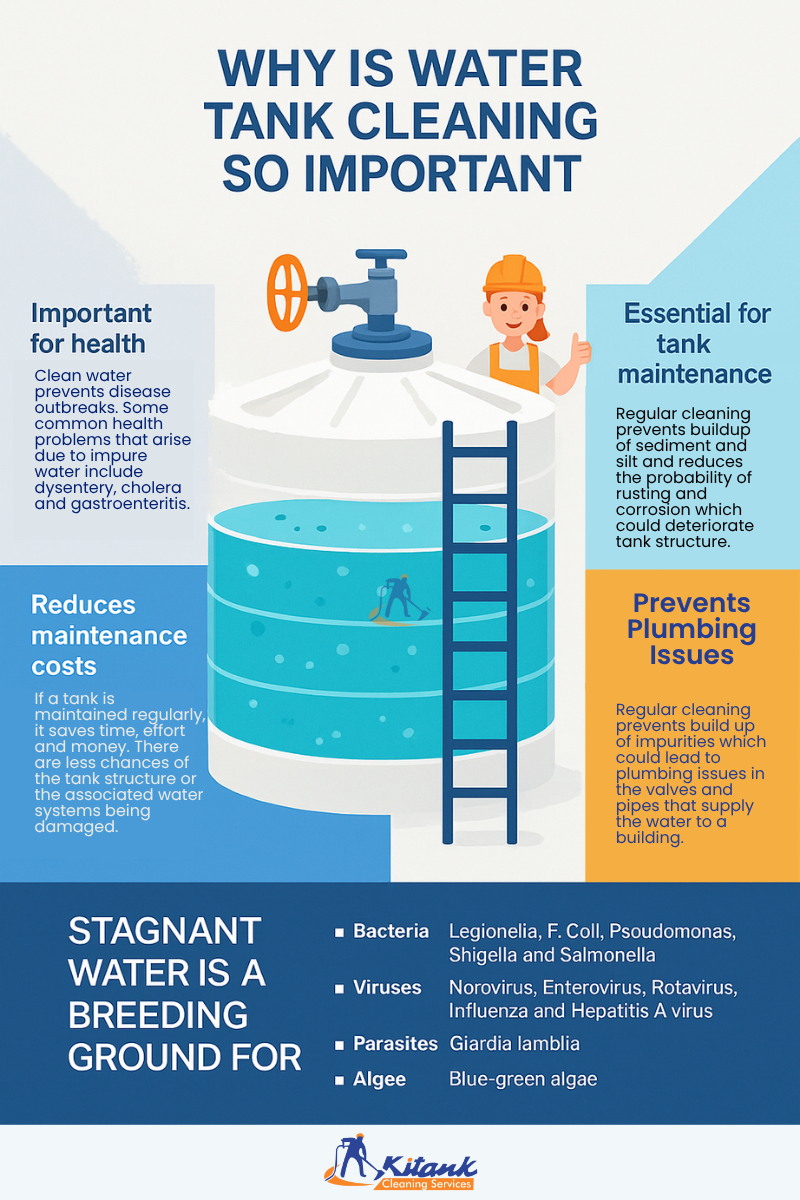
Ensuring the water in your home or business is safe and clean starts with a crucial, yet often overlooked, task: keeping your water tank clean. But how clean is the water inside your tank? A clean tank is your first line of defense against a host of contaminants, including harmful bacteria, algae, and sediment that can accumulate over time. Neglecting this essential maintenance can lead to unpleasant tastes and odors, the spread of waterborne diseases, and even costly damage to your tank’s structure.
Understanding the risks of a dirty water tank is the first step toward protecting water quality and safeguarding public health. Regular water tank cleaning protects the health of your family or customers and ensures your water remains pure and fresh while safeguarding your investment.
This guide will explore the importance of water tank cleaning, detailing the benefits and providing practical tips for keeping your water tank in optimal condition.
The Hidden Dangers in Your Water Tank
Water tanks are essential to modern plumbing, storing water from municipal supplies, borewells, or rainwater harvesting. Homes, apartment complexes, businesses, and farms rely on them daily.
These tanks come in various materials, each with its own merits. Yet all share a common flaw: over time, they can accumulate unseen contaminants.
It’s easy to assume that clear water is clean water. However, a host of invisible threats can thrive in a neglected tank.
What’s Really in Your Water?

When left unmaintained, water storage tanks can accumulate several contaminants:
- Bacteria and Viruses: Pathogens like E. coli, Salmonella, and Legionella can multiply in stagnant water, causing serious waterborne diseases.
- Algae and Fungi: These organisms form a slimy biofilm on the tank’s inner surfaces. This film degrades water quality and harbors other microbes.
- Sediment and Sludge: Dirt, sand, and organic matter settle at the bottom, creating a murky environment where germs flourish.
- Rust and Corrosion: Metal parts in older tanks can corrode, leaching particles into the water and giving it a metallic taste.
A dirty water tank degrades water quality and creates serious risks to your health, finances, and the environment. Neglecting water tank hygiene can spread waterborne illnesses like typhoid, cholera, and Legionnaires’ disease. A poorly maintained tank can also lower water pressure, damage appliances, and lead to legal action for failure to maintain a safe water supply.
Why Is It Important To Clean Your Water Tank?
Cleaning your water tank is essential for maintaining water quality, preventing health risks, and preserving your plumbing system. A neglected tank accumulates harmful bacteria, algae, and sediment that contaminate your water supply.
Here’s why regular water tank cleaning is important:
1. Protect Your Health
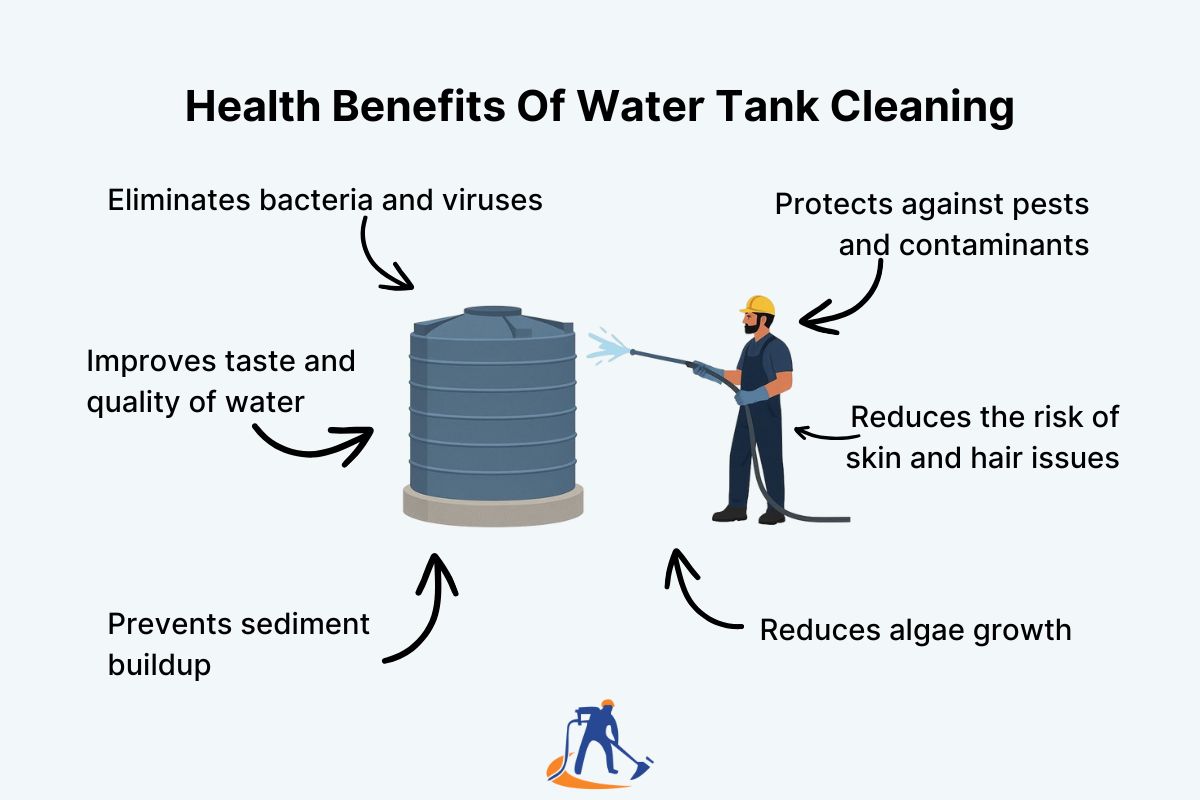
The primary benefit is, without a doubt, protecting the health of your family, employees, or customers. An uncleaned tank becomes a breeding ground for dangerous microorganisms, turning your water into a significant health hazard.
Prevent Waterborne Diseases
Sediment, dirt, and organic matter accumulate in a water tank, creating an ideal environment for bacteria like E. coli, Salmonella, and Legionella to thrive alongside viruses and parasites.
Using this contaminated water for drinking, cooking, or bathing can lead to severe waterborne diseases such as cholera, typhoid, and dysentery. The consequences include severe gastrointestinal illness, fever, and even death. Young children, the elderly, and those with weakened immune systems are especially vulnerable. Regular cleaning and disinfection eliminates harmful pathogens and sharply reduces the risk of illness.
Reduce Exposure to Harmful Microorganisms
Long-term exposure to microorganisms or the toxins some algae produce can lead to chronic health problems. A high microbial load can diminish your overall well-being. By cleaning your tank regularly, you minimize this exposure and protect your long-term health.
Ensure Safe Water for Daily Use
For any household that relies on tank water for drinking, cooking, or bathing, cleanliness is non-negotiable. Regular cleaning ensures your water remains potable—safe to drink and free from harmful contaminants. This is vital in areas with limited access to other safe water sources.
2. Preserve Water Quality
Beyond health, a clean tank directly affects the look, smell, and taste of your water.
Enjoy Fresh-Tasting, Odor-Free Water
Algae, bacteria, and organic matter in a dirty tank create unpleasant tastes and musty or metallic odors. This not only makes water unappealing to drink but also affects the flavor of cooked foods and beverages. Regular cleaning removes removes algae and sediment that can make water taste and smell unpleasant, ensuring your water tastes fresh and has no odor.
Maintain Water Clarity
A dirty tank is the usual source of cloudy or discolored water. Suspended dirt, rust particles, or a greenish tint from algae are common signs. Cleaning removes these impurities, keeping your water clear and aesthetically pleasing.
Prevent Biofilm Growth
Biofilm is a common problem in water tanks. It is a slimy layer of bacteria, fungi, and algae that sticks to the inner surfaces. This film shields pathogens from disinfectants like chlorine, making them harder to kill. Moreover, biofilm itself also leaches contaminants and undesirable tastes or odors into the water.
Regular scrubbing removes biofilm, which makes disinfection more effective and prevents this persistent contamination.
3. Tank Maintenance: Maintain Your System and Save Money
Proper water storage tank maintenance offers practical and economic benefits by protecting your plumbing system and optimizing its performance.
Extend Your Tank’s Lifespan
Sediment and sludge can corrode and wear down a tank’s interior, leading to leaks, cracks, and premature failure. Regular cleaning prevents this damaging buildup, preserving the tank’s structure and helps extend the life of your tank. This proactive maintenance step is far cheaper than emergency repairs or a costly replacement.
Prevent Clogged Pipes and Damaged Appliances
Debris and rust from a dirty tank can enter your plumbing, clogging pipes, faucets, and filters. These particles can also damage water-using appliances (e.g., washing machines, dishwashers, and water heaters), leading to inefficient performance and expensive repairs. A clean tank ensures a clear, free-flowing supply that protects your plumbing and appliances.
Improve Water Flow and Pressure
Sediment buildup within the tank and in the outlet pipes can impede the free flow of water. This leads to a noticeable drop in water pressure at faucets, showers, and other water outlets throughout your property. Cleaning the tank removes these blockages, ensures unobstructed water flow and maintains optimal water pressure throughout your entire plumbing and water distribution system.
4. Compliance & Reputation (for Businesses)
Regular water tank cleaning is crucial for businesses to ensure compliance with health and safety regulations, safeguard their reputation, and prevent costly issues. Contaminated water can lead to health hazards, damage equipment, and result in legal penalties or business closures.
Ensuring Compliance with Health and Safety Regulations
Businesses are required to adhere to strict health and safety standards set by regulatory bodies. These regulations often mandate maintaining clean water tanks to ensure water quality and prevent contamination.
For example, in Kenya, the Water Act and regulations from bodies like the National Environment Management Authority (NEMA) and the Water Services Regulatory Board (WASREB) set stringent water quality standards that businesses must adhere to.
Regular cleaning helps businesses stay compliant with these regulations, avoiding legal issues and demonstrating a commitment to public health. For businesses in the hospitality, food and beverage, and healthcare sectors, the scrutiny is even more intense, as the risk to public health is considerably higher.
Mitigating Regulatory Risks
Failing to maintain clean water tanks can lead to serious regulatory consequences. Authorities may impose hefty fines or even order temporary shutdowns if water quality standards are not met. NEMA, for instance, can impose fines exceeding KES 2 million per violation. Routine tank maintenance minimizes these risks, keeping operations running smoothly and avoiding costly penalties.
Protecting Business Reputation
A business’s reputation rests on trust. In industries like hospitality, healthcare, and food service, water quality is a direct measure of that trust. Contaminated water shatters it, sickening customers and employees and causing severe financial and operational setbacks.
- Protect Health and Brand: A commitment to clean water protects the health of your staff and clientele, building a strong, trustworthy brand. Conversely, a single contamination incident can inflict reputational damage that is difficult to repair.
- Ensure Operational Efficiency: Dirty water tanks lead to sediment, algae, and corrosion. This buildup clogs pipes, damages equipment, and reduces water flow, causing costly repairs and operational downtime. Regular cleaning prevents these disruptions and ensures a reliable water supply.
- Strengthen Community and Company Culture: Proactively ensuring water safety and quality demonstrates a commitment to community well-being, earning public trust and customer loyalty. This same commitment helps attract and retain talented employees, who rightly expect a safe and healthy workplace.
Is Your Water Tank Due for a Cleaning? Signs and Cleaning Frequency
Regular checks can help you identify a problem before it escalates. Here’s what to look for and how often you should plan a cleaning.
⚠️ Urgent Warning Signs Your Tank Needs Immediate Attention
There are several telltale signs that indicate your water tank is in urgent need of cleaning:
- Visible sludge, dirt, or debris at the bottom.
- Algae growing on the inner walls.Water that appears discolored, cloudy, or murky.
- An unusual taste or smell (metallic, musty, or earthy).
- A noticeable drop in water pressure.
- A sudden spike in unexplained illnesses (stomach issues, skin rashes) among people using the water.
To prevent problems before they start, a consistent cleaning schedule is key.
✅How Often Should You Clean Your Water Tank?
The ideal cleaning frequency depends on several factors, including the source of your water (e.g., municipal, well, rainwater harvesting), the tank’s material, and its usage.
As a general guideline:
- Residential Water Tanks should be inspected and professionally cleaned at least once every six months to a year.
- Commercial/Industrial Tanks may require more frequent cleaning, perhaps every three to six months, due to higher consumption and stricter health codes.
High-Risk Areas with poor water quality or high levels of dust and pollution will require more frequent inspections and cleanings.
🧽 How to Clean Your Water Tank
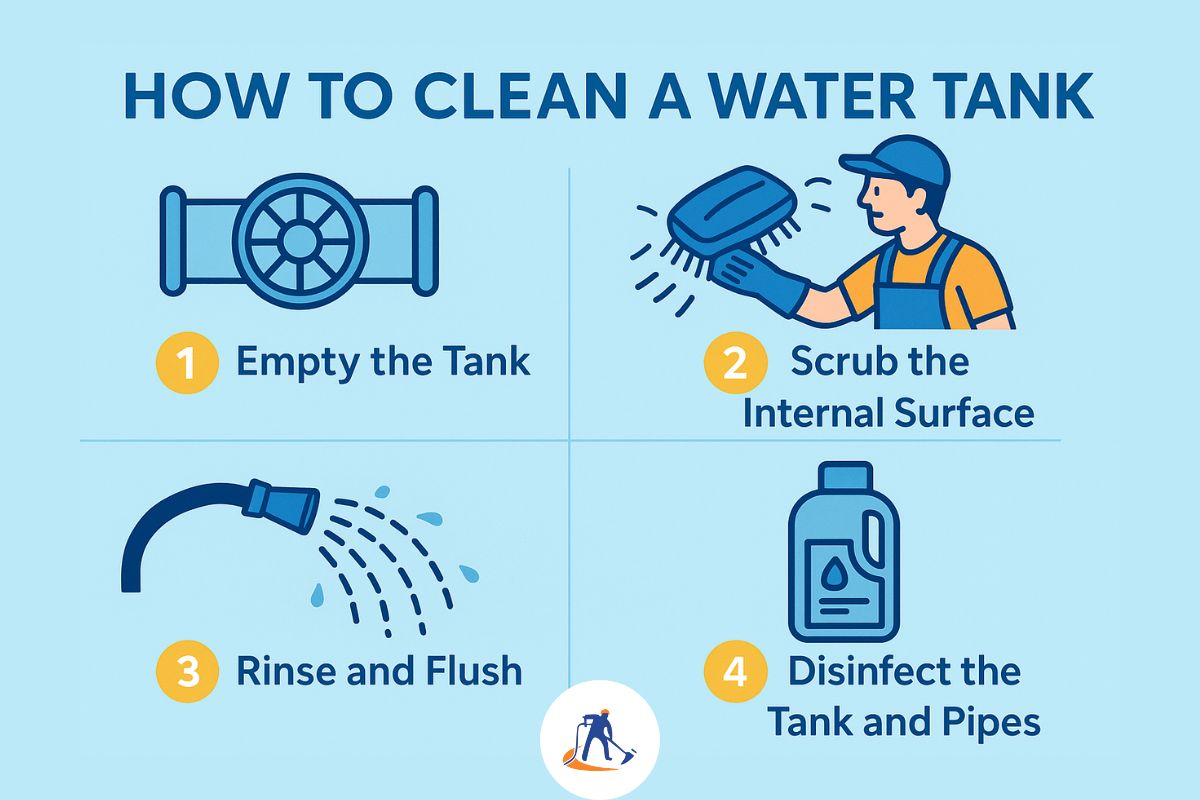
Once a cleaning is needed, you have two options: do it yourself (DIY) or hire a professional water tank cleaner.
Method 1: The DIY Step-by-Step Cleaning Process
For smaller, accessible tanks, a DIY cleaning is manageable.
🦺Safety First: Before you begin, disconnect the tank from the water supply and electrical sources (like a pump). Always wear protective gear, including waterproof gloves, safety goggles, and a face mask to protect yourself from bacteria and chemical fumes.
- Drain the Tank: Open the outlet to empty the tank. Use a pump if needed.
- Scrub the Interior: Use a stiff brush or high-pressure washer to scrub the inner walls and floor. Remove all sludge and slime.
- Disinfect: Prepare a solution of one part unscented household bleach to 50 parts water. Apply it to all inner surfaces and let it sit for at least two hours.
- Rinse Thoroughly: This step is critical. Rinse the tank with clean water several times until no trace of a chlorine smell remains.
- Refill: Once clean and fully rinsed, refill the tank and reconnect it to your plumbing.
Method 2: Hire a Professional Service
While some tank owners may opt for DIY cleaning, there are clear situations where hiring professional water tank cleaning services is highly recommended.
Professionals are the safest and most effective choice for:
- Very large tanks
- Tanks with confined entry points
- Tanks that require specialized equipment for safe and effective cleaning.
Trained water tank cleaners have the expertise, safety gear, and right tools to do the job correctly and without damaging the tank. They handle the entire process, which often includes inspections, minor repairs, applying anti-bacterial coatings, and a final water quality check.
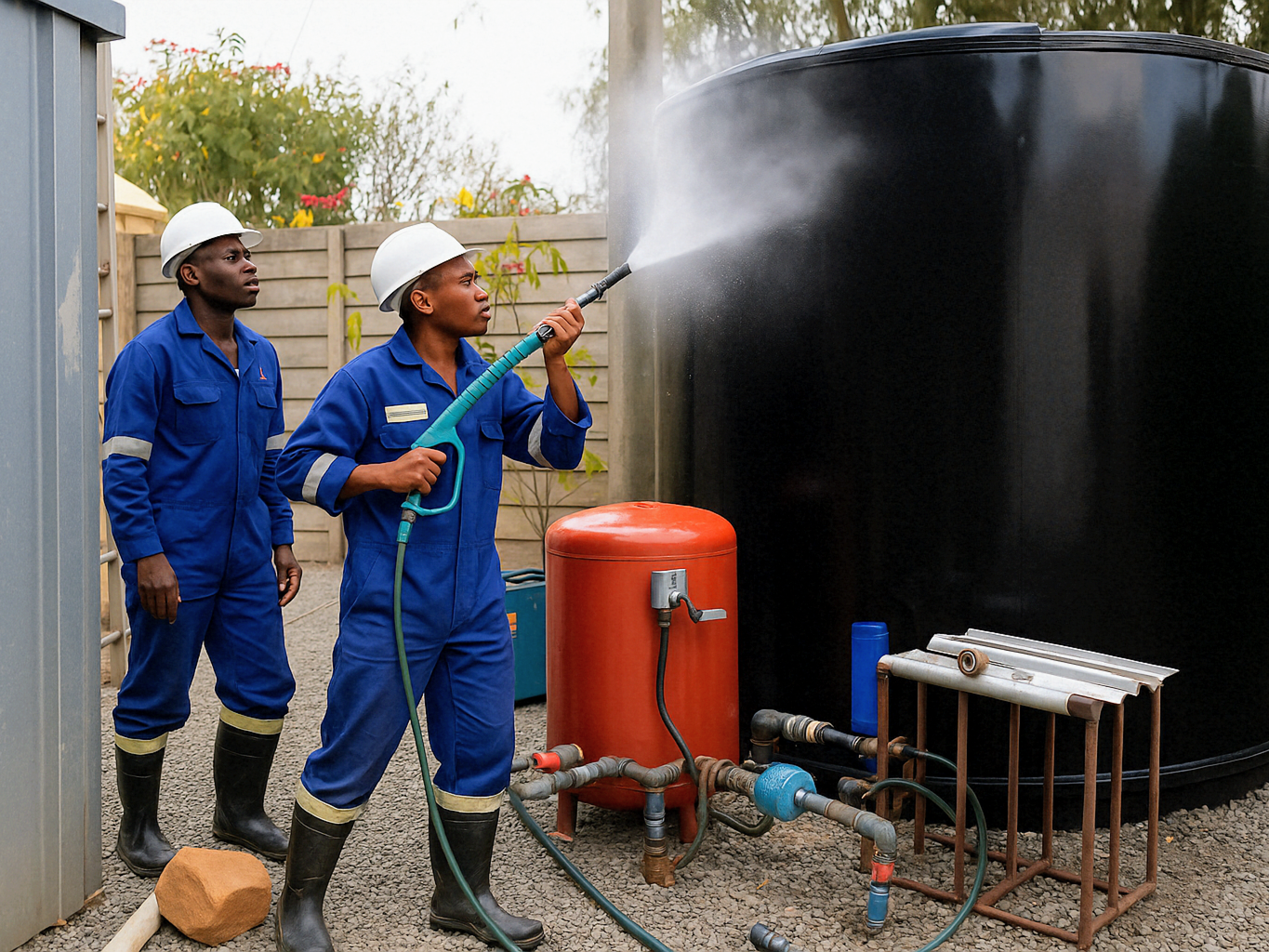
In Kenya, prices for residential water tank cleaning services typically range from KES 5,000 to KES 20,000, with the final price depending on the tank’s size, accessibility, location and the complexity of the cleaning job. Contact providers for exact quotes.
💡 Tip: Always choose a licensed and certified cleaning company with positive customer reviews and transparent pricing to ensure you receive quality service.
Preventive Measures to Keep Your Water Tank Cleaner for Longer
Cleaning is crucial, but prevention is even better. Adopting a few simple habits can significantly extend the time between cleanings and ensure better water quality year-round.
Simple Habits for a Consistently Cleaner Tank
- Ensure a Tight Seal: Always keep the tank lid securely fastened to prevent dust, leaves, pests, and other debris from entering and contaminating the water.
- Install Pre-Filters: Use filters on the tank’s inlet and outlet pipes to block sediment, rust, and other contaminants before they can even reach the tank.
- Conduct Regular Checks: Once a month, take a quick look inside your tank to check for any early signs of contamination
- Fix Leaks Promptly: Inspect your tank for cracks or leaks and repair them immediately to prevent contamination
These small steps stop big problems before they start.
🔧The Future of Tank Maintenance: Innovations for a Smarter Approach
Technology is continuously evolving, making tank maintenance easier, more efficient, and often more environmentally friendly. Keep an eye on these innovations:
- Smart Monitoring Systems: Modern systems now incorporate sensors that can track water quality in real-time, monitoring parameters like turbidity, pH, and chlorine levels. These systems can send you alerts on your phone if any anomalies are detected, allowing for proactive intervention.
- Eco-friendly, Non-toxic Cleaning Agents: As environmental awareness grows, more sustainable tank cleaning solutions are becoming available. These offer safer alternatives to traditional harsh chemicals, reducing environmental impact and potential risks to health.
- Robotic Cleaning Tools: For larger or less accessible tanks, robotic cleaning tools are becoming more common. These autonomous devices can navigate the tank’s interior, scrubbing surfaces and removing sediment efficiently, often without the need to drain the entire tank, offering safer and more effective solutions.
These upgrades are becoming more affordable and more necessary every year.
Clean Your Tank. Protect Your Health. Secure Your Water. Save money.
Keeping your water tank clean is not just household upkeep; it is essential for your health and safety. A dirty tank harbors dangerous bacteria and contaminants that degrade water quality and can cause waterborne diseases. The buildup of sediment and biofilm also damages plumbing.
Prioritizing your water tank’s cleanliness ensures safe drinking water for your family or business. Routine maintenance, whether done by you or a professional service, removes sediment, prevents algae growth, and eliminates harmful pathogens. This guarantees that the water you use daily is clean, safe, and of the highest quality, protecting the health of your family or customers, your property, and your finances
Don’t let your water tank become a hidden health hazard or a source of future costly problems. Ensure your water is always pristine and safe with professional expertise. Contact KiTank Cleaning Services today for a comprehensive water tank cleaning service across Nairobi and major Kenyan towns. Protect your most vital resource!