

You turn on the tap, but the water is cloudy, discoloured, or has a foul, earthy taste. Or maybe you’ve spotted a constant, worrying puddle near your water tank’s base.
This moment forces a critical decision: Do you need a simple cleaning, a technical repair, or a full, costly replacement? This is the core dilemma many homeowners, property managers, and business owners face.
Making the wrong call is costly. Replacing a tank that just needed a professional water tank cleaning service wastes thousands of shillings. Worse, trying to clean or repair a structurally compromised tank is a dangerous, temporary fix. It can lead to catastrophic property damage or expose your family to serious health risks.
This guide provides a clear framework to help you diagnose the symptoms and confidently decide the safest, most cost-effective path forward.
This guide provides a clear framework to help you diagnose the symptoms and confidently decide the safest, most cost-effective path forward.
Important Note
This guide is exclusively for cold water storage tanks (large plastic, metal or concrete vessels). We’re not discussing pressurized hot water heaters (geysers), which have different failure-modes and solutions.
Start Here: How to Diagnose Your Water Tank Problem
Choosing between cleaning, repair, or replacement depends on a careful assessment of water quality, structural integrity, and the tank’s age.
Diagnose the problem before choosing a solution. Your tank’s symptoms are the best clues for assessing its health. A simple visual inspection can reveal the likely issue. Here’s a general framework to guide your decision-making:
1. Your 5-Point Water Tank Diagnosis Inspection Checklist
Look for these five essential diagnostic signs to determine the problem’s nature and severity:
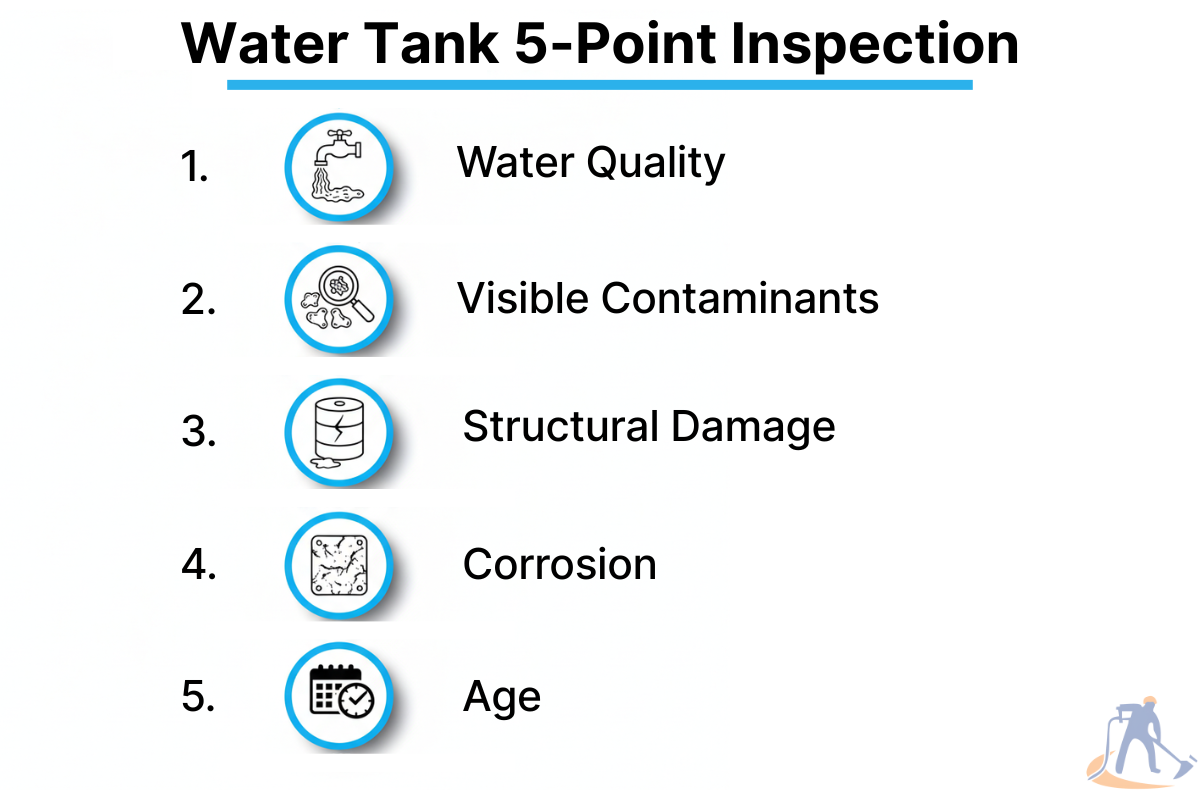
- Water Quality Check (Taste, Smell, Color): A musty, earthy, or metallic taste, a bad smell, or a brownish/cloudy tint signals internal contamination. Any change in water quality indicates an immediate need for professional cleaning and disinfection; consider a water quality test if health is a concern.
- Visible Contaminants: Safely look inside the tank’s opening. Do you see a thick layer of sludge, green or black algae on the walls, rust particles, or drowned pests? These are signs of a dirty water tank that demand a professional cleaning and disinfection.
- Structural Damage (Exterior): Check the tank body and the area around its base. Are there visible cracks, bulges, warps, or active leaks? Minor, specific leaks can often be repaired.
Large cracks or any bulging in the tank’s body are a non-negotiable sign for replacement. - Corrosion & Rust: On metal tanks, are there visible rust spots? On all tanks, check the fittings, valves, and pipes. Are they leaking or cracked? Extensive internal corrosion is a non-negotiable sign for replacement.
- Age & UV Degradation: Is the tank over 15 years old? For plastic tanks, does the exterior look faded, “chalky,” or show tiny surface cracks? This indicates the material is brittle and at high risk of failure, making replacement the proactive choice.
If you notice any of these common water tank problems, your next step is to determine the severity to decide between cleaning, a simple repair, or a full replacement.
2. Quick Triage: Clean, Repair, or Replace?
Based on your 5-point diagnosis, use this quick guide to find your solution.
- ✅ CLEAN IF: You have water quality issues (taste, smell, color), visible sediment, or algae, but the tank is otherwise structurally sound. This is preventative maintenance.
- ⚠️ REPAIR IF: Your tank is relatively young and has localized, fixable damage. This includes leaking fittings, faulty valves, or small, sealable non-structural cracks.
- ❌ REPLACE IF: Your tank is old (10-15+ years) or shows signs of major structural failure. This includes leaks from the tank body, bulging walls, deep corrosion, or persistent rust-colored water that cleaning cannot fix.
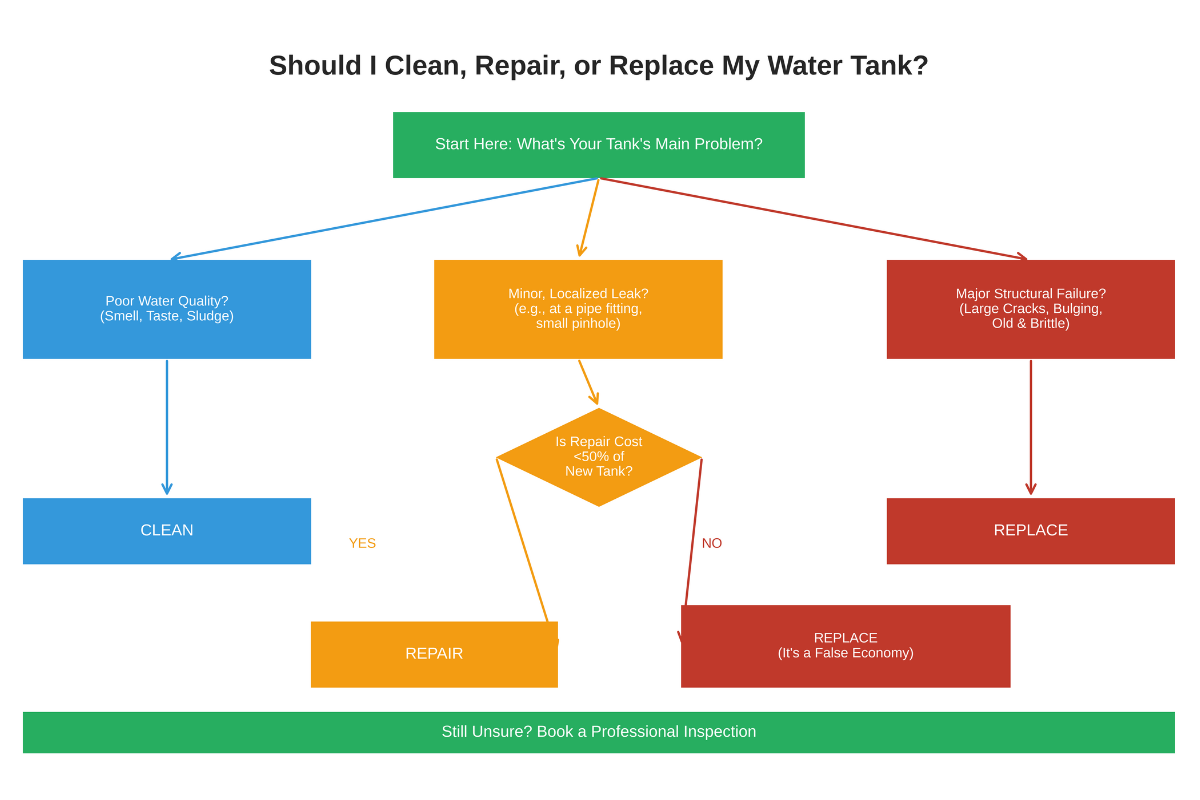
This guide will now walk you through each path in detail.
The Golden Rule: When in doubt, consult a professional. An expert can provide a definitive, on-site diagnosis and prevent you from replacing a tank that just needed cleaning—or from cleaning a tank that is about to burst.
When You Only Need Professional Water Tank Cleaning
Before you budget for a costly repair or replacement, rule out the simplest culprit: a dirty water tank. When hygiene and contamination are the primary concern, professional water tank cleaning is the most effective solution.
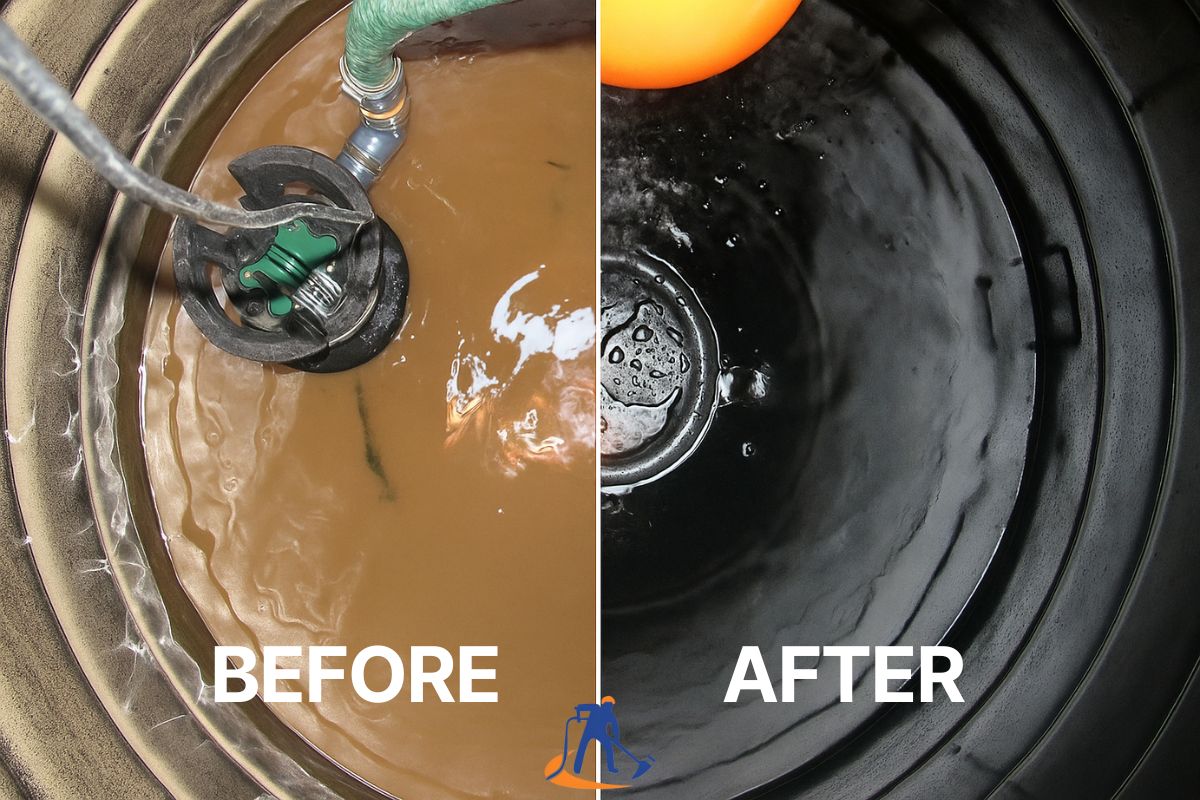
Over time, sediment, silt, and biofilm (a slimy, living layer of bacteria) build up inside the tank. This contaminates your water supply and puts your family at risk.
Signs Your Water Tank Just Needs a Deep Clean
If your tank is structurally sound, these red flags indicate it is overdue for a professional water tank cleaning:
- Bad Odour or Taste: The water has a “rotten egg,” “earthy,” or “swampy” smell.
- Discoloured or Cloudy Water: Your water looks yellowish, brownish, or milky.
- Visible Contaminants: You can see silt, dirt, or sludge at the bottom of the tank.
- Algae or Slime: The inner walls are coated in a green or black slimy layer (biofilm).
- Slow Water Flow: Accumulated sediment and debris can clog pipes, filters, and outlet systems, leading to a noticeable drop in water pressure.
- After a Contamination Event: If you experience flooding, heavy rainfall that may have compromised the lid, “boil water” alert, or a sudden change in water quality, immediate professional intervention is required.
- Maintenance Due: It’s been over 6 to 12 months since your last professional cleaning.
Why DIY Tank Cleaning is Dangerous & Ineffective
Tempted to drain the tank and clean it with soap or bleach? Please don’t. DIY water tank cleaning is risky and often ineffective for ensuring clean water.
- Safety Risks: A tank is a confined space. Entering one can be deadly. Poor airflow or strong cleaning fumes (like bleach) can cause suffocation. This is before even considering the risk of falling, as many water tanks in Kenya are located on rooftops.
- Ineffectiveness: A simple water tank scrub with Jik or soap cannot safely remove biofilm or kill pathogens like E. coli or Giardia. Professionals use high-pressure jets to blast this layer off and then use food-grade, KEBS-approved disinfectants that are safe for your drinking water.
What Professional Cleaning Involves (More Than Just a Rinse)
A professional clean is a meticulous, multi-stage process. The cleaning and disinfection process, like the one used by KiTank Cleaning Services, typically includes these steps:
- Safe Draining: We safely drain the contaminated water.
- Sludge Removal: We physically scoop out all mud, sediment, and thick slime.
- High-Pressure Jetting: We use powerful 3000+ PSI water jets to scour the tank’s walls, floor, and ceiling, blasting away all stubborn residue.
- Disinfection: We apply a KEBS-approved, food-grade disinfectant to the entire interior to kill 99.9% of harmful bacteria, viruses, and germs.
- Final Rinse & Refill: We thoroughly rinse the tank, leaving a sterile, safe environment ready for fresh water.

The Benefits of Routine Professional Cleaning
Hiring professional water tank cleaning services is a small investment for a massive return in health and safety.
- Eliminates Pathogens: Kills bacteria, viruses, and algae that cause serious waterborne diseases like typhoid and cholera.
- Improves Water Quality: Fixes bad taste, odor, and color.
- Protects Plumbing: Removes sediment that clogs pipes, taps, and appliances.
- Extends Tank Lifespan: Regular maintenance prevents corrosion and deterioration.
- Ensures Compliance: Helps meet health and safety standards set by bodies like the KEBS and WASREB.
The “Hidden Bonus”: A valuable benefit of professional cleaning is the internal inspection. When the tank is empty, our certified technicians can identify micro-cracks, pitting, and failing seals before they become costly disasters.
How Often to Clean Your Tank (and Typical Costs in Kenya)
The ideal water tank cleaning frequency depends on usage, water quality, and environmental conditions. The cost of water tank cleaning services varies based on tank size, accessibility, level of contamination, and the services requested.
| Tank Usage Profile | Recommended Cleaning Frequency | Key Contamination Risks | Estimated Professional Cleaning Cost Range (Ksh) |
| Residential (Low-Volume) | 6 – 12 Months | Sediment, biofilm, occasional algae | 3,000 – 10,000 |
| Institutional/Commercial (High-Volume) | 3 – 6 Months | High pathogen load, rapid sediment accumulation | 5,000 – 15,000 |
| Post-Contamination Event | Immediately | Waterborne diseases, chemical residue | Variable (Includes testing/disinfection) |
Think your tank just needs a clean? Book a professional cleaning service today and get peace of mind.
When Your Water Tank Needs Repair
Repair is the middle ground. If your tank has a specific, localized problem and is otherwise in good health, a targeted repair is your most cost-effective solution. The goal is to fix a single point of failure and extend the tank’s service life.
Signs You Need Water Tank Repair (And What’s Fixable)
A professional repair is likely your best bet if you see:
- Leaking Fittings or Valves: The leak is clearly from where a pipe connects to the tank. This is often a simple plumbing fix.
- Faulty Components: The tank itself is fine, but the float valve (ballcock) is stuck or broken (causing overflow), or the lid is cracked. These are simple, replaceable parts.
- Small, Stable Cracks or Pinhole Leaks: You see a single, small hairline crack or a constant, slow drip from the tank body.
- Puddles or Wet Spots: You notice a constant damp spot or small puddle at the base of the tank, indicating a slow, persistent leak.
Common Repair Methods by Tank Type
Water tank repair methods vary significantly based on the tank material, and the type of damage, focusing on a strong, waterproof, and non-toxic seal using specialized materials
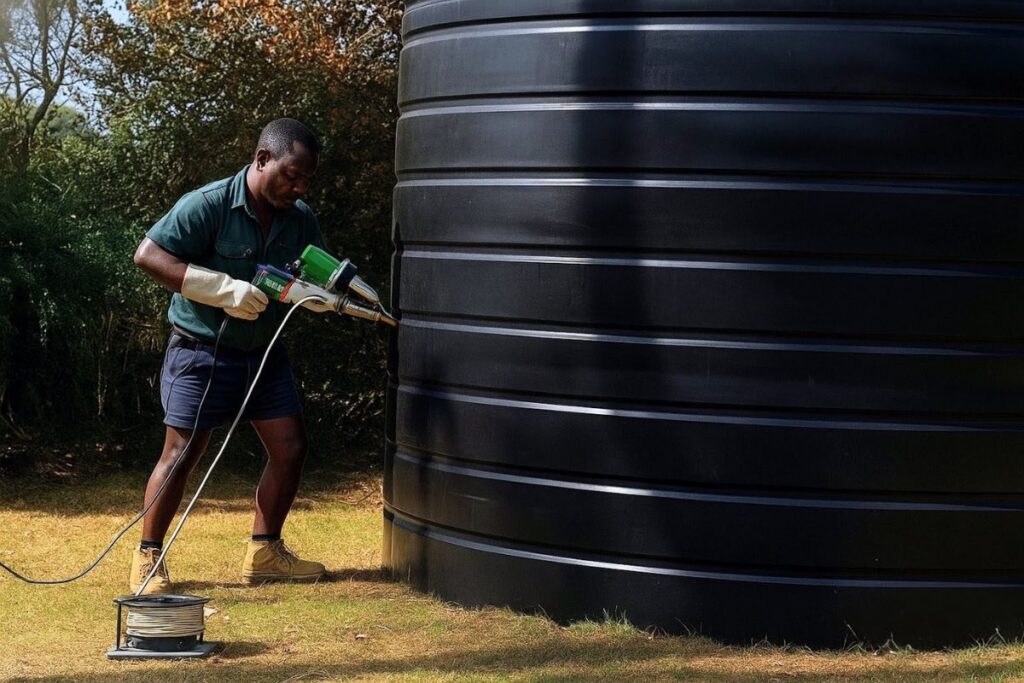
- For Plastic (Poly) Tanks: The gold standard is plastic welding. A technician uses a specialized heat tool and a plastic filler rod to melt the plastic and permanently fuse the crack.
- For Concrete Tanks: Specialists fill the crack with hydraulic cement or inject a waterproof epoxy or polyurethane sealant.
- For Steel Tanks: Small rust spots can be patched, but this is often a temporary fix, as corrosion is rarely an isolated problem.
Safety Warning: Use Non-toxic Materials ONLY
All repair materials (epoxy, sealants, etc.) must be certified as “food-grade” or “potable-water-safe”. Using the wrong sealant can leach toxic chemicals into your drinking water. Always hire a certified professional.
The “Repair vs. Replace” 50% Rule
This is the most important financial guideline: The 50% Rule.
If the total cost of a repair is more than 50% of the cost of a brand-new, installed water tank, replacement is the smarter long-term investment.
Spending Ksh 15,000 to repair a tank that costs Ksh 40,000 to replace is a smart move. Spending Ksh 25,000 to patch that same tank is a bad investment, especially if the tank is already 10 years old.
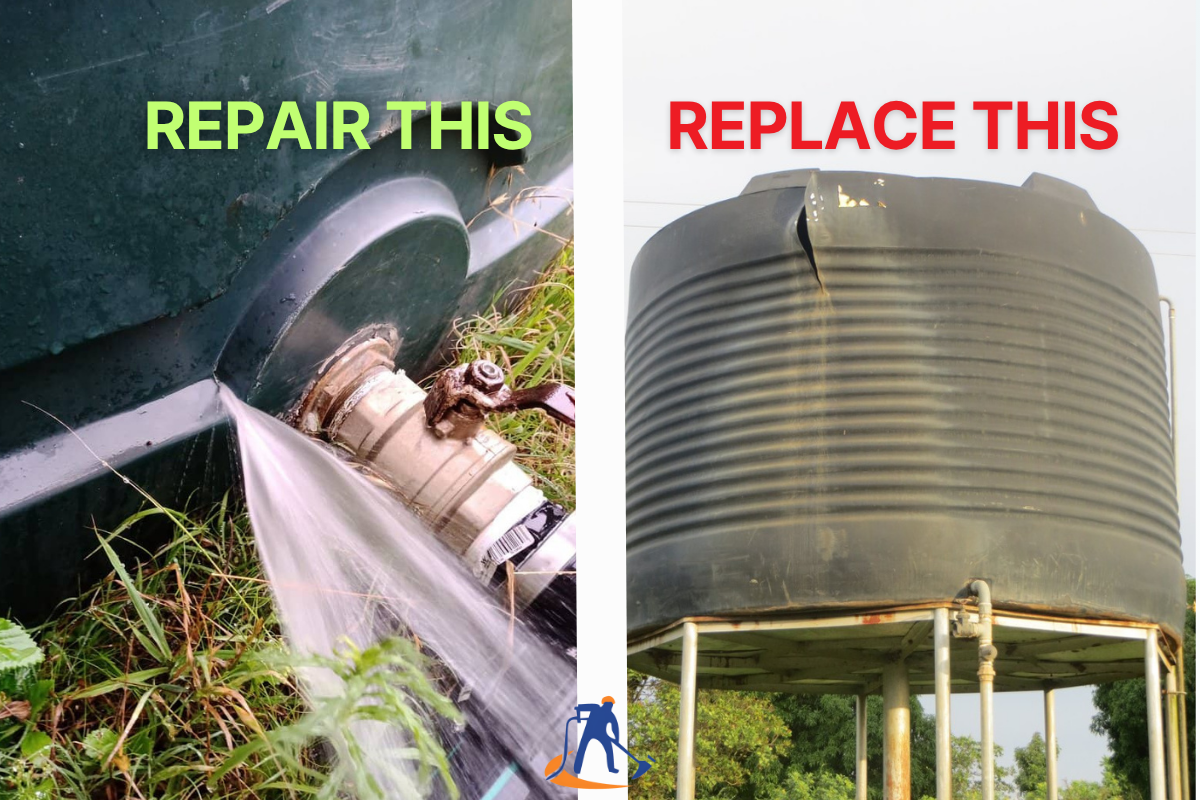
Estimated Water Tank Repair Costs in Kenya
| Service Type | Target Tank Material Type | Typical Cost Range (Ksh) | What it Fixes |
| Inspection & Diagnosis | All | Ksh 1,000 – Ksh 2,500 | Professional assessment to confirm the damage. |
| Valve / Fitting Replacement | All | Ksh 2,000 – Ksh 5,000 | Leaks at inlet/outlet pipes, broken float valves. |
| Crack Sealing / Plastic Welding | Plastic / Concrete | Ksh 3,000 – Ksh 8,000 | Small, non-structural leaks and cracks. |
| Patching (Anti-Corrosive) | Steel | Ksh 3,000 – Ksh 8,000 | Rust spots and pinhole leaks on steel tanks. |
| Full Internal Liner | All | Ksh 10,000 – Ksh 20,000+ | Restores a severely deteriorated but still sound tank. |
When It’s Time for a Full Water Tank Replacement
Sometimes, a repair is just wasting money. When a water tank shows signs of structural failure or severe degradation, replacement is a critical necessity for your property and health.
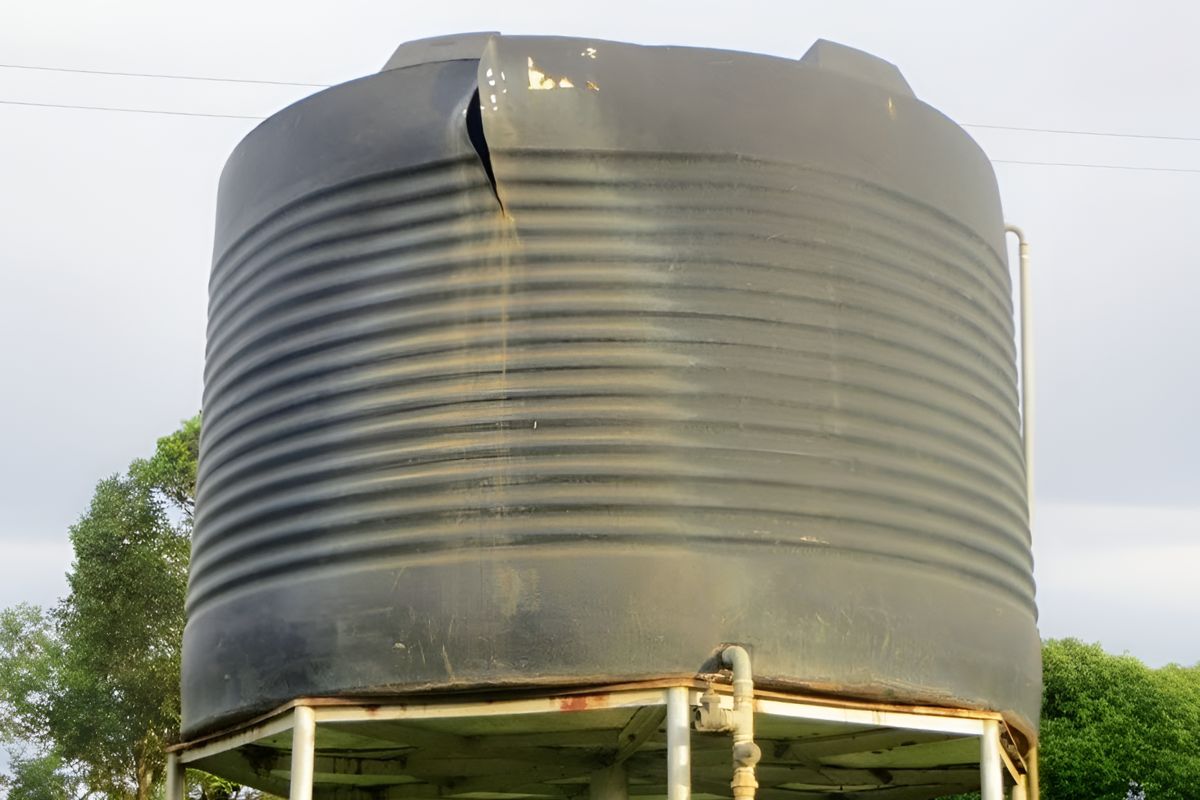
The 5 Red Flag Signs You Need a New Water Tank
- Major Structural Failure: Large, expanding “spider-web” cracks, or if the tank walls are visibly bulging outwards or caving in. The structure is compromised and could burst.
- Advanced Age & Material Degradation: The tank is past its 10-15 year lifespan, or the plastic is faded, brittle, and “chalky” from UV damage.
- Severe, Deep Corrosion (Metal Tanks): You see widespread, flaking rust. If your water is always rusty even after a clean, the tank is corroding from the inside out.
- Persistent Contamination: The bad taste, smell, or cloudy water returns within weeks of a professional cleaning. This means the tank material itself is porous and harboring bacteria.
- Financial Failure: The tank needs frequent repairs, or a single repair quote violates the 50% Rule.
The Hidden Costs of Avoiding Replacement
Trying to “get one more year” out of a failed tank is a dangerous gamble. The risks include:
- Catastrophic Property Damage: The tank bursting and flooding your rooftop, destroying ceilings, and ruining electronics.
- Chronic Health Risks: Old, brittle plastic with micro-cracks becomes a permanent breeding ground for bacteria that even professional cleaning cannot reach.
- Wasted Money: Paying thousands for a repair that inevitably fails.
Choosing Your New Water Tank: Materials & Costs in Kenya
When selecting a new water tank in Kenya, invest in the highest quality you can afford. Always prioritize a KEBS-certified supplier to ensure the material is premium, UV-stabilized, and food-grade.
| Tank Material Type | Typical 5,000L Price (Ksh) | Estimated Service Lifespan | Typical Warranty |
| Standard Polyethylene (Plastic) | Ksh 29,000 – Ksh 40,000+ | 10 – 15 Years | 1 – 3 Years |
| Premium Triple-Layer Plastic | Ksh 43,000 – Ksh 57,000+ | 15 – 25+ Years | 5 – 10 Years |
| Stainless Steel / Metal | 50,000 – 150,000+ | 30 – 50+ years with proper maintenance | 10 years workmanship warranty or more |
| GRP (Glass Reinforced Panel) | Ksh 80,000 – Ksh 250,000+ | 25 – 50+ Years with minimal maintenance | 10+ Years |
The Financial Verdict: Cost vs. Long-Term Value
Your decision comes down to immediate cost versus long-term safety and value.
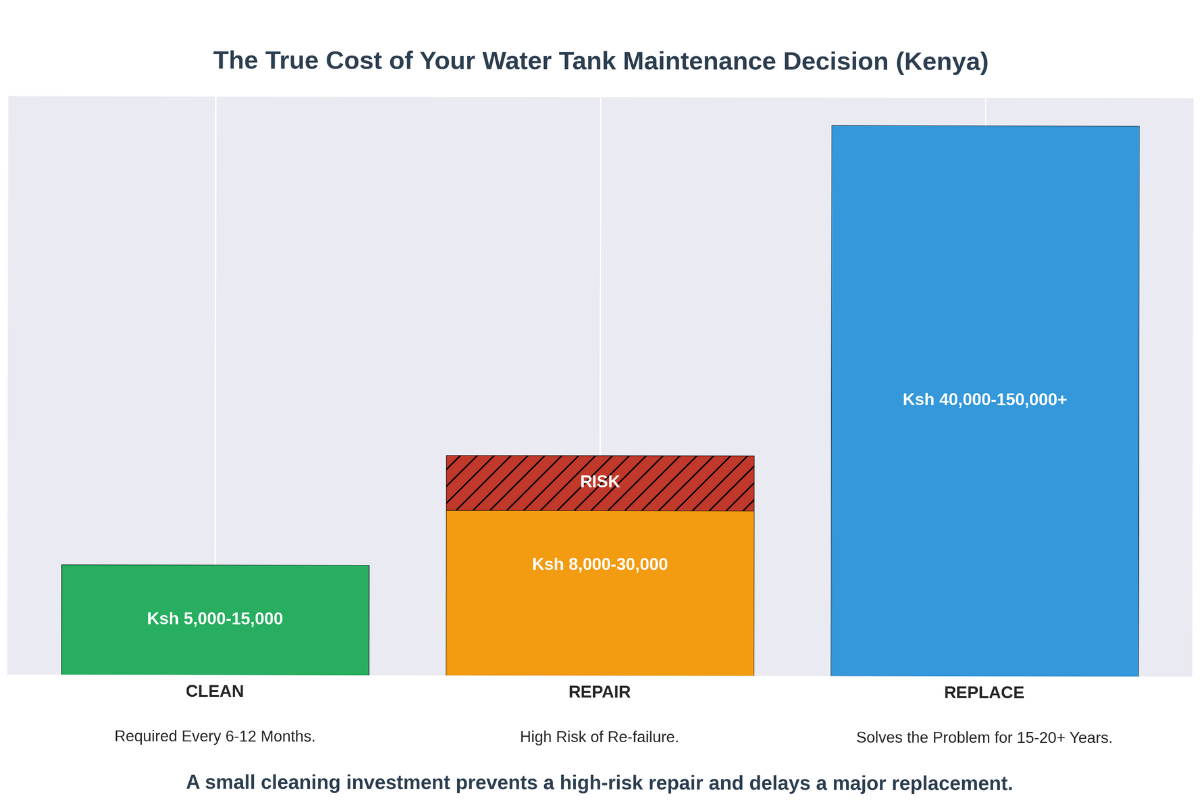
Cost Comparison & ROI Analysis: Cleaning, Repair, and Replacement
| Feature | Professional Cleaning | Professional Repair | Full Replacement |
| Estimated Cost (Residential) | Ksh 3,000 – Ksh 15,000+ (depending on size and contamination level) | Ksh 1,500 – Ksh 25,000+ (depending on damage type/extent and material) | Ksh 20,000 – Ksh 100,000+ (depending on tank size, material, and labor) |
| Problem Solved | Bad taste, smell, sediment, and algae. | Localized leaks, cracks, and faulty fittings. | Structural failure, old age, and health risks. |
| ROI & Long-Term Outlook | High ROI (Immediate). Extends tank life, protects health, and guarantees safe water for 6-12 months. | High Risk. Only worthwhile if the tank is young and the repair is <50% of replacement cost. | High ROI (Long-Term). A major investment that guarantees water security for 15-20+ years. |
Proactive maintenance (cleaning) offers the highest ROI by significantly extending the tank’s functional lifespan and ensuring water quality at the lowest cost. Repairs offer good ROI for minor issues, but for an old, failing tank, the long-term ROI of a new replacement outweighs repeated repair costs.
Proactive Maintenance: How to Extend Your Tank’s Lifespan
Regular, professional water tank maintenance is the most effective way to avoid expensive repairs and premature replacements. By scheduling routine cleaning and inspections, you actively manage your tank’s lifespan, protect your family’s health, and avoid surprise emergency costs.
“Most homeowners only think about their tank when it’s leaking. They’d save 80% of their costs if they just thought about it twice a year for a cleaning. A KSh 6,000 cleaning easily prevents a KSh 40,000 replacement.” – Certified Plumber, Nairobi
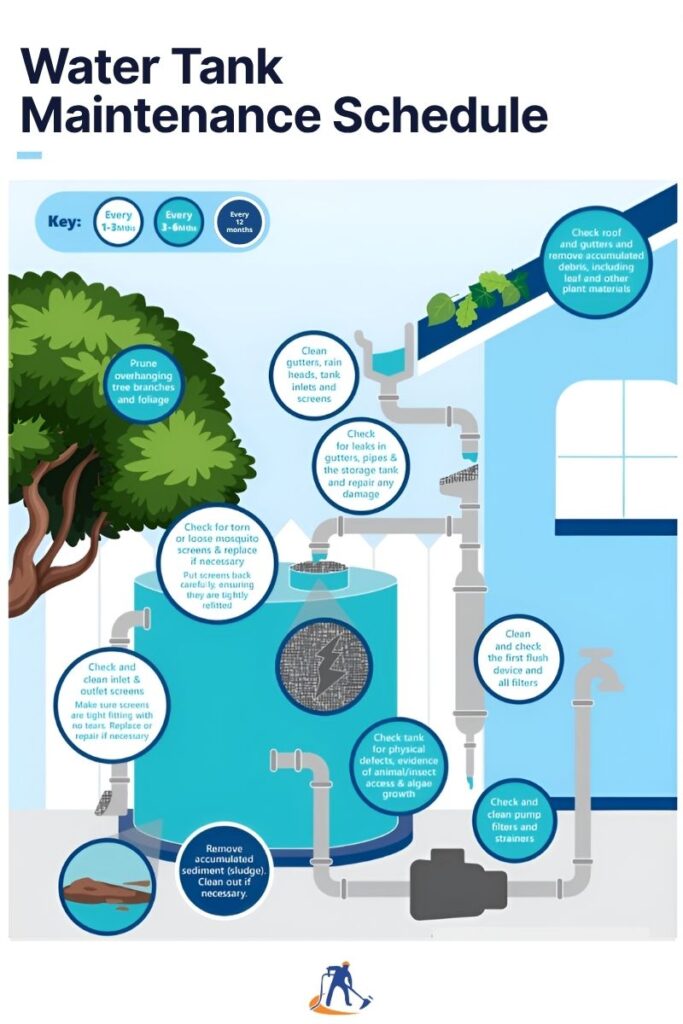
Want to get 20 years out of your tank instead of 10? Follow these expert water tank maintenance tips:
- Schedule Professional Maintenance: Have a qualified professional inspect your tank every 6-12 months. This allows them to catch small issues like hairline cracks or early corrosion before they become disasters.
- Protect it from the Elements: Ensure your tank has proper ventilation to prevent moisture buildup. If it’s outdoors, shield it from harsh, direct sunlight and UV rays, which degrade materials over time.
- Manage Water Quality: Install filters on your inlet pipe. A simple sediment filter or first-flush diverter will catch dirt and debris, minimizing sludge buildup. In hard water areas, a water softener can reduce the mineral scale that corrodes interiors and clogs lines.
- Keep the Area Clear: Maintain a 3-foot (1-meter) clearance around your tank. This prevents debris from trapping moisture against the tank and deters pests.
- Perform a Visual Check (Every 3 Months): Take five minutes to ensure the lid is secure and look for new cracks or leaks.
Download your FREE Water Tank Maintenance Checklist
Learn to spot issues before they become costly, ensuring your water is safe and free from contamination. This checklist helps you gain peace of mind.
Why Guess? Get an Expert Diagnosis You Can Trust
You now have a clear framework. You can confidently diagnose your water tank’s issues and decide between water tank cleaning, repair, and replacement.
To summarize:
- CLEAN: For health, prevention, and all “dirty water” symptoms (bad smells, foul tastes, sediment, or algae).
- REPAIR: For specific, localized damage (a single crack, a faulty fitting) on an otherwise healthy tank that doesn’t violate the “50% rule.”
- REPLACE: For end-of-life structural failure (extensive damage, deep corrosion, or brittle, bulging materials).
Not sure which path to take? A professional inspection is the fastest way to get a clear answer.
Contact KiTank Cleaning today for a fast, honest, no-obligation assessment. Our experts will inspect your tank and give you a recommendation you can trust, even if it’s a solution we don’t provide.
Call or WhatsApp us today at 0729 735 245 for a free consultation and quote. Or Book Your Professional Inspection online.
