
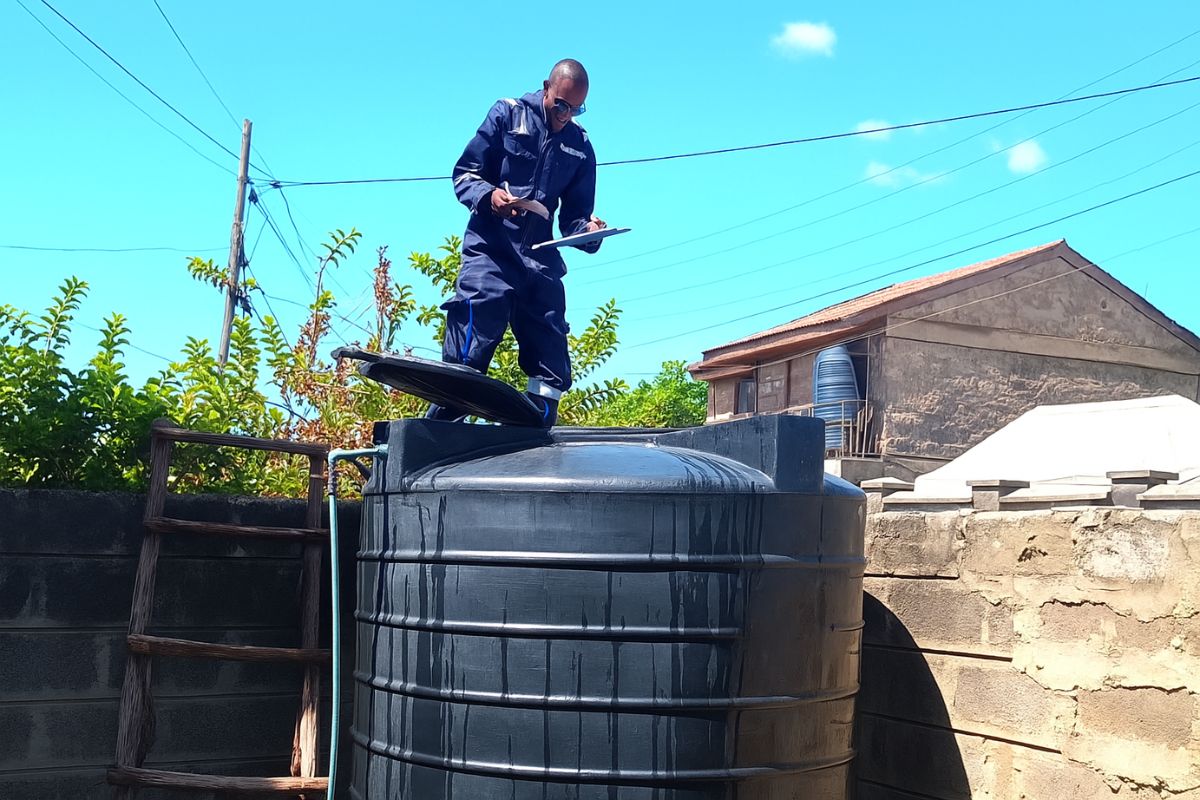
Ensuring the water your family uses is safe and clean starts with one crucial, often-overlooked asset: your water tank. Whether for a home, business, or farm, a well-maintained storage tank is the first line of defense against contamination and costly system failures. Neglecting it can lead to everything from foul-tasting water and health risks to structural damage and expensive emergency repairs.
The answer lies in a proactive approach. Implementing a routine water tank inspection and maintenance checklist is the single most effective way to guarantee your water remains safe, your system operates efficiently, and you avoid costly emergency repairs down the line.
This comprehensive guide will equip you with everything you need to know, from establishing a maintenance schedule to performing a thorough cleaning and knowing when to call in the experts.
The Critical Importance of Regular Water Tank Maintenance
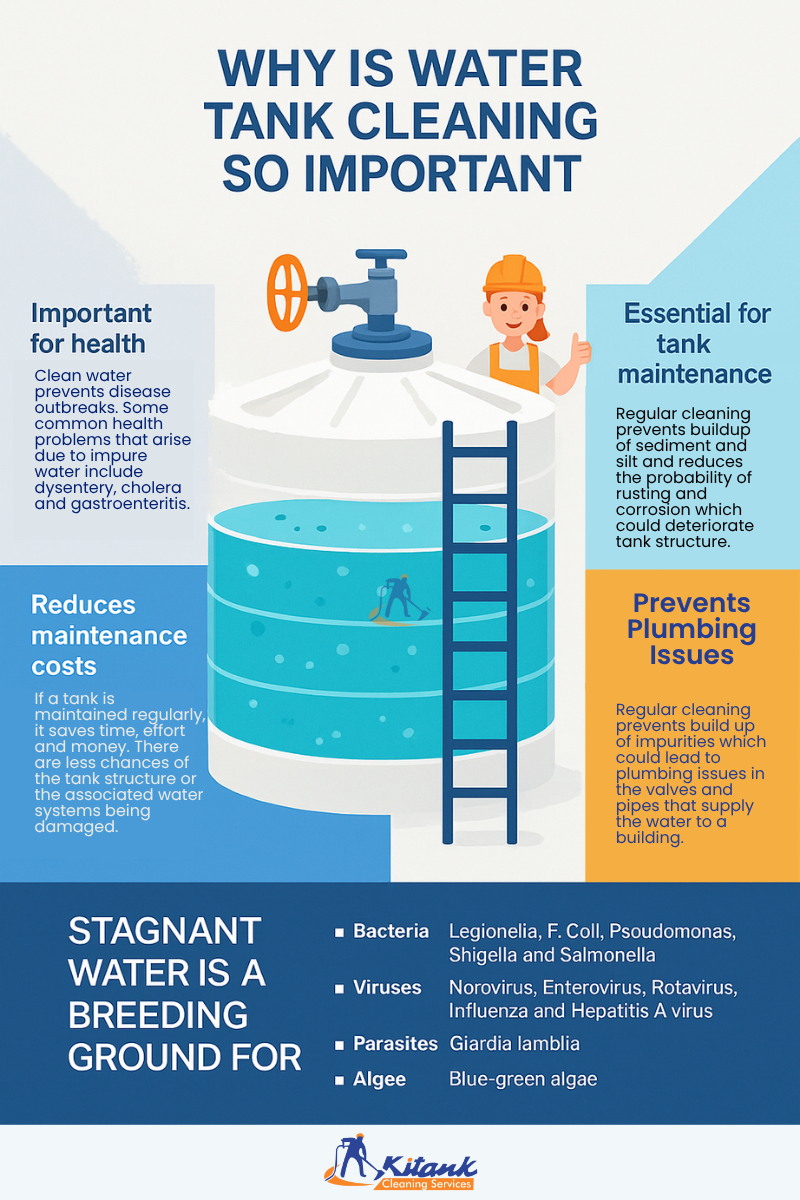
Routine water tank maintenance, including cleaning and inspections, offers peace of mind and tangible benefits that go far beyond just a safe, clean, and reliable water supply. Key benefits of water tank care include:
- Safeguard Health: A neglected tank is a breeding ground for harmful bacteria, algae, and sediment. Regular cleaning removes these contaminants, protecting you from waterborne illnesses and ensuring the water used for drinking, cooking, and bathing is safe.
- Ensure Longevity & Save Money: Corrosion, cracks, and biofilm can drastically shorten a tank’s lifespan, leading to premature replacement. Proactive maintenance prevents this decay, saving you thousands of shillings in future repairs and replacement costs.
- Maintain Operational Efficiency: Sediment and sludge can clog pipes, reduce water pressure, and strain your pump. A clean tank ensures a reliable, high-pressure water supply throughout your property.
- Uphold Regulatory Compliance: For businesses, schools, and public facilities, maintaining detailed records of water system maintenance is essential for demonstrating due diligence and complying with health and safety regulations.
‘Regular professional cleaning ensures a deeper, more thorough clean than a quick rinse, preventing costly repairs and safeguarding your family’s health.’ – Maxwell B., Water Tank Cleaning Expert.
Your Complete Water Tank Inspection Checklist
Consistency is key. Use this tiered schedule to stay on top of your tank’s health. Note that while maintenance principles are universal, specific things to look for may depend on your tank’s material (plastic, concrete, or steel).
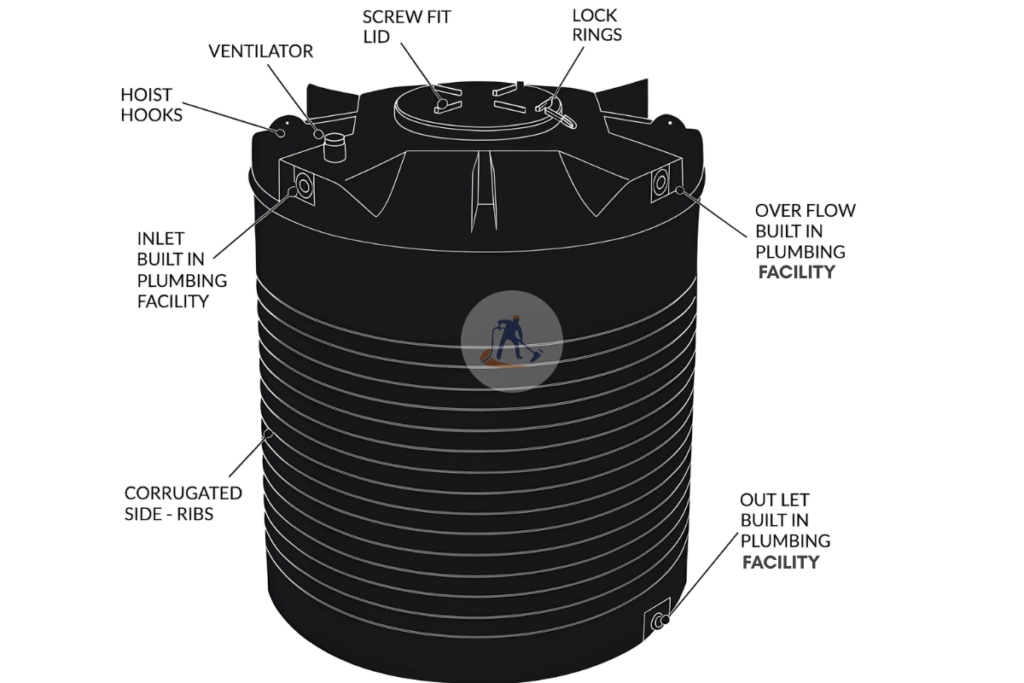
1. Monthly Visual Check (5-Minute DIY Inspection)
Perform regular visual checks to catch problems early. These quick inspections, taking only a few minutes, can help identify problems early on. Focus on the exterior for cracks, rust, or damage, and check for leaks around the tank. Also, ensure the tank is securely anchored.
- External Structure & Foundation:
- Examine the tank’s exterior for any signs of corrosion, rust, peeling paint, cracks, or bulging.
- Confirm the tank is stable on its foundation. Check for any erosion or subsidence around the base that could compromise its stability.
- Look for leaks at seams, joints, and around the base. Pay attention to damp patches on the ground or water stains on the tank body.
- Roof, Vents, and Hatches:
- Ensure the access hatch is securely closed and locked to prevent unauthorised entry and contamination.
- Check that all air vents and overflow pipes are fitted with fine mesh screens to block insects, rodents, and debris from entering the water supply. These screens must be intact and clean.
- Pipework and Valves:
- Inspect all visible pipes connected to the tank (inlet, outlet, drain, overflow) for leaks or corrosion.
- Briefly operate valves to ensure they are not seized and can be fully opened and closed.
Download the Free Monthly Water Tank Maintenance Checklist (PDF)
2. Semi-Annual Detailed Inspection
Twice a year, perform a more thorough examination.
- Tank Walls & Structure:
- For Plastic/Fiberglass Tanks: Look for discoloration, cracks, or any signs of bulging, which can indicate structural stress or UV degradation.
- For Concrete Tanks: Search for new or expanding cracks, flaking concrete (spalling), or white mineral deposits that signal a slow leak.
- For Steel Tanks: Inspect closely for rust, bubbling paint, or pitting, especially around seams and bolts where moisture can collect.
- Roof, Ladders & Overflows: Check the tank roof for cracks or areas where water might pool. Ensure overflow pipes are properly screened. If you have a ladder, check that it is secure and free from rust.
- Water Quality Check: Briefly run a tap. Does the water have any unusual color, taste, or smell? Note any cloudiness.
- Level Indicators: If your tank has a float valve or level gauge, test it to ensure it’s functioning correctly to prevent overfills or the pump running dry.
3. Annual Professional Service & Internal Cleaning
At least once a year, a professional service is essential, especially for potable water tanks. This process often requires confined space entry, which is extremely dangerous without proper training and safety equipment.
A professional will safely inspect the tank’s interior for:
- Sediment & Sludge: Measuring the buildup on the tank floor that can harbor bacteria.
- Biofilm & Algae: Checking for slimy growth on the walls, which can protect germs from disinfection.
- Internal Linings & Structures: Inspecting for peeling coatings, corroded anodes, or damaged internal supports.
Get Your Free Water Tank Maintenance & Inspection Checklist (PDF)
Stop guessing and start maintaining! Our comprehensive checklist and guide give you the expert tips you need to keep your water tank clean and safe. Download now to simplify your inspection process.
Interpreting Your Findings: Common Problems & Solutions
After your inspection, use this table to diagnose potential water tank issues and determine the next steps.
| Symptom | Possible Causes | Recommended Action |
| Cloudy or Discoloured Water | Sediment, rust, internal algae, or biofilm. | A professional drain and deep clean is necessary. The water is likely unsafe. |
| Foul Odour or Bad Taste | Bacterial growth, decaying organic matter, stagnant water. | Immediate action required. Drain, clean, and disinfect the tank professionally. |
| Low Water Pressure | Sediment buildup in pipes, a faulty valve, or an airlock. | Check outlet valve for blockages. If the problem persists, a professional flush is needed. |
| Visible Leaks or Cracks | Corrosion, structural stress, or worn-out seals. | Minor leaks may be patched temporarily, but professional repair is essential for safety and to prevent water loss. |
| Slimy Walls (Biofilm) | A serious colony of microbes. | This is a significant health hazard that must be removed with professional high-pressure equipment. |
| Green/Black Growth (Algae) | Sunlight is entering the tank through a crack or unsealed lid. | Find and seal the light source. The tank requires a thorough cleaning as algae feeds other harmful bacteria. |
Taking Action: DIY Cleaning vs. Hiring a Professional
Based on your findings, you can decide on the right course of action.
Part 1: How to Safely Clean & Disinfect Your Water Tank (For Minor Issues)
If your inspection reveals only very minor sediment and you are not due for a professional clean, you can perform a basic disinfection.
CRITICAL SAFETY WARNING: NEVER enter a water tank yourself. Confined spaces can contain toxic gases or lack oxygen, leading to injury or death. All DIY maintenance must be performed from outside the tank.
- Safety First:
- Wear safety gear: Use non-slip boots, waterproof gloves, eye protection, and a mask, especially when handling sediment or cleaning agents.
- Shut off all power to pumps or associated equipment to prevent accidental startup while you clean.
- Use a Certified Cleaner: Only use cleaning agents certified for potable water systems. Never use household soaps or detergents, as they can leave harmful residues that are difficult to rinse away and can contaminate your water supply.
Step-by-Step Water Tank Cleaning Process
Here’s a guide to safely cleaning and disinfecting your water tank at home:
- Drain the Tank: Open the outlet valve and drain all water away from the foundation of your house.
- Prepare Solution: Prepare a disinfection solution using unscented household bleach. A safe guideline is 50 ml of bleach for every 1000 litres of water.
- Disinfect: With the tank empty, spray the interior surfaces with the solution.
- Refill and Wait: Close the drain and refill the tank completely with clean water. Let the solution stand for at least 4-6 hours to sanitize the tank and the water.
- Flush the System: Drain the disinfected water completely. Refill with fresh water. Open all taps in your home to flush the solution from your pipes until you no longer smell disinfectant.
This method does not remove biofilm or kill bacteria. For guaranteed safe water, a professional service is the only reliable option.
Part 2: When to Call a Professional Water Tank Cleaner Immediately
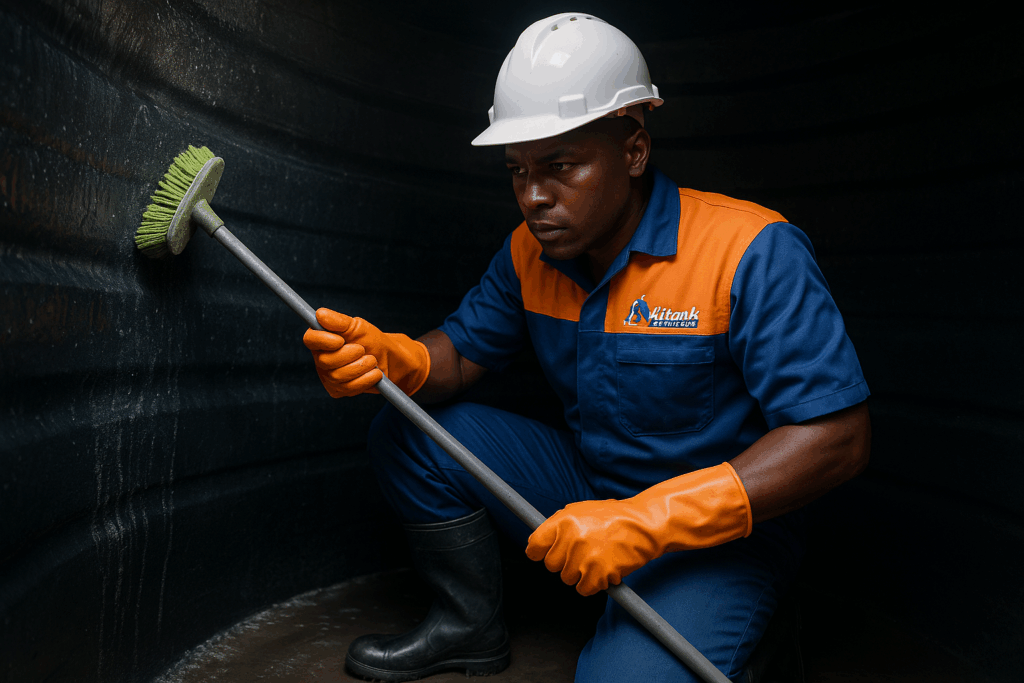
DIY maintenance has its limits. For your safety and to ensure the job is done correctly, hire professional water tank cleaning services if you see:
- Major Structural Damage: Any large cracks, significant leaks, or bulging walls.
- Persistent Contamination: Water remains discoloured or has a bad taste after a DIY flush.
- Thick Sludge or Slimy Walls: These require specialized high-powered vacuums and pressure washers.
- It’s Been Over a Year: An annual professional deep clean and disinfection is the best practice for guaranteed safety.
- Evidence of Pests: Discovery of animal remains or insect infestations inside the tank.
A professional service in Kenya, like KiTank Cleaning Services, uses advanced equipment beyond a simple brush and bucket. They employ high-powered vacuums for complete sludge removal, use high-pressure washing to strip stubborn biofilm without damaging tank surfaces, ensure a thorough disinfection process, and a final water quality check, giving you total peace of mind.
Tips For Maintaining And Maximising The Lifespan Of Your Water Tank
A regular maintenance routine is crucial for ensuring water quality and extending the life of your tank. The required frequency of these tasks can vary based on tank material, water source, and usage. Here are some general guidelines:
Ongoing Best Practices
- Keep the Lid Secure: Your tank’s lid is its main defense. Ensure it is always tightly sealed and locked to prevent contamination.
- Block Sunlight: If your tank is plastic, ensure it is opaque. Sunlight promotes algae growth.
- Install a Pre-Filter: A sediment filter on the inlet pipe reduces silt buildup, extending the time between cleanings.
Scheduled Maintenance
- Circulate Backup Water: To prevent stagnation in a backup tank, periodically use the water for tasks like gardening.
- Inspect Semi-Annually: Every six months, conduct a thorough inspection to assess the tank’s structural condition and the general water quality.
- Clean Regularly:
- Domestic Tanks: Clean every 6-12 months.
- Commercial/Industrial Tanks: Clean every 3-6 months, depending on use and water turnover.
- Monitor Water Quality:
- Sensory Checks: Regularly check for any unusual taste, color, or odor. Note any cloudiness or discoloration.
- Laboratory Testing: For definitive assurance of safety, consider periodic lab tests for contaminants like bacteria (E.coli, coliforms), pH levels, and turbidity.
Keep Thorough Records
- Log All Maintenance: Keep a detailed log of all inspections, cleanings, and repairs. Note the date, findings, and actions taken. This record helps track the tank’s condition and identify developing patterns.
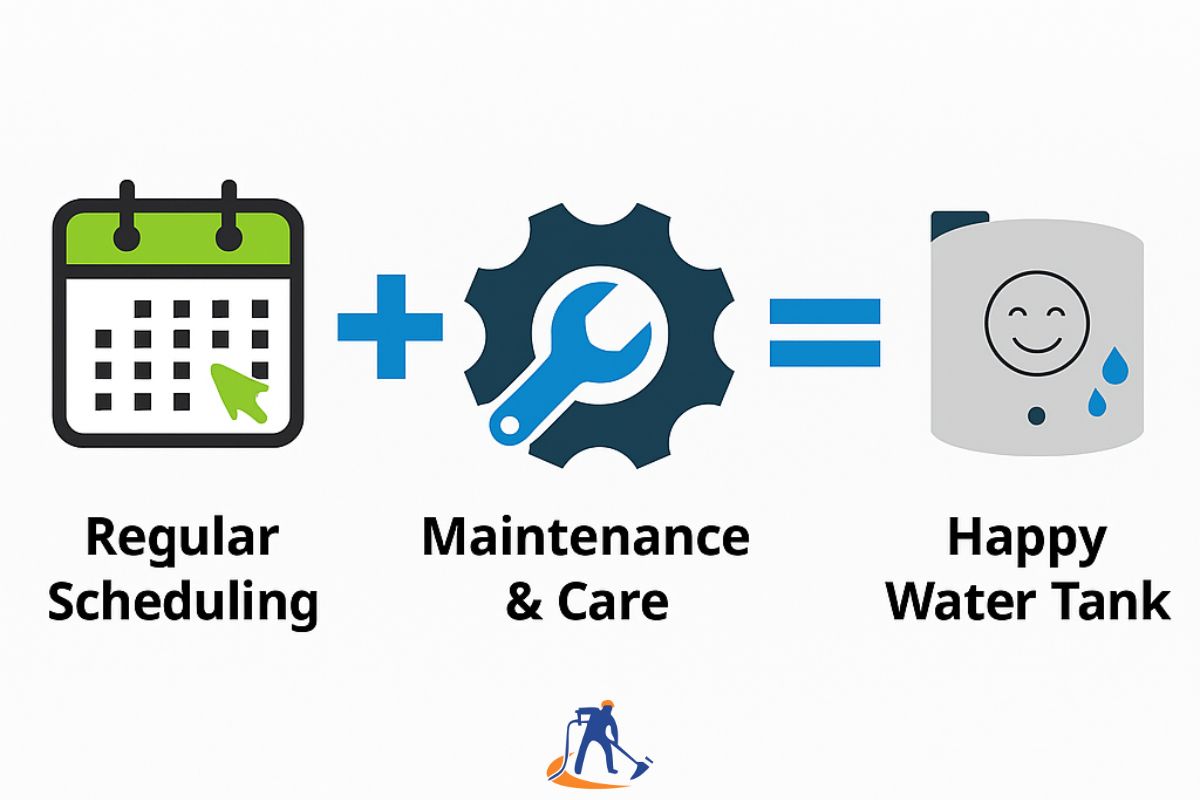
Keep Your Water Tank in Top Shape
Routine water tank maintenance is not a chore—it is an essential practice for protecting your health, your property, and your peace of mind. By using this guide to inspect your tank, diagnose issues, and take appropriate action, you can be confident in the quality of your water.
Ready to guarantee your water is clean and safe?
If your inspection revealed major issues, or it’s simply time for your annual deep clean, trust the experts. For a thorough, safe, and hygienic service, contact KiTank Cleaning Services today to schedule your professional water tank inspection and cleaning service.
Call Us at 0729 735 245 or Book Online for a Free Quote!
